
.livi-tag-link:hover{color:#c95757 !important;}
A 2,000-bird Livi Chicken Cage project in Ghana is a market and flock-lifecycle decision first, not a cage count. Confirm the egg sales route, feed supply, water, power, and labor before comparing layouts. LIVI's A-Type Chicken Cage (ABKE-007) is documented for 5,000–30,000 birds, so a 2,000-bird plan needs project-specific confirmation.
Project Solution at a Glance
| Item | Status |
|---|---|
| Target market | Ghana |
| Planning scale | 2,000 birds |
| Buyer stage | Project direction: whether to start, what model, what scale |
| Equipment focus | LIVI A-Type Chicken Cage (ABKE-007) |
| Documented scale | 5,000–30,000 birds; 2,000-bird layouts need LIVI confirmation |
| Reference project | LIVI Burkina Faso 5,000 layers + 5,000 pullets; not Ghana data |
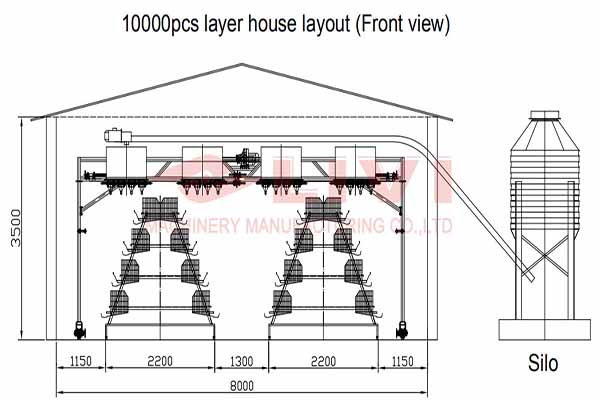
Planning a Similar 2,000-Bird Project in Ghana?
Share your target bird number, flock type, house dimensions, water and power conditions, and intended egg sales route so LIVI can help you check the project direction.
Quick Answer: Is a 2,000-Bird Livi Chicken Cage Project in Ghana Worth Starting?
Yes, if commercial conditions are verified first. Judge a 2,000-bird flock on egg market access, feed, water, power, and labor, not bird count alone. Because ABKE-007 is documented for 5,000–30,000 birds, a 2,000-bird layout is a customized configuration. Cage count, tier configuration, and house layout depend on confirmed house dimensions, flock type, and automation level. No Ghana price or yield figures are supplied.
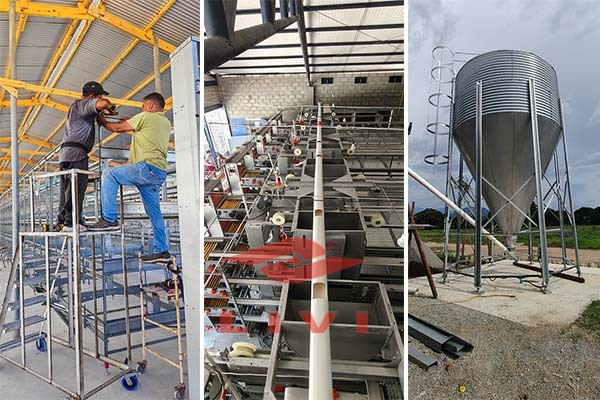
Why Direction Comes Before Cage Selection
Flock type decides whether A-Type layer cages or A-Type brooding equipment fit better: the same 2,000 birds can be a layer flock, a pullet start, or a phased entry into commercial egg production. Young chicks control body temperature poorly and need supplementary heat in their first days, so brooding belongs in the first planning round (poultry housing and management in developing countries). Plan site, water, and power for a larger final capacity if expansion is expected, and let repeat daily labor drive automation decisions.
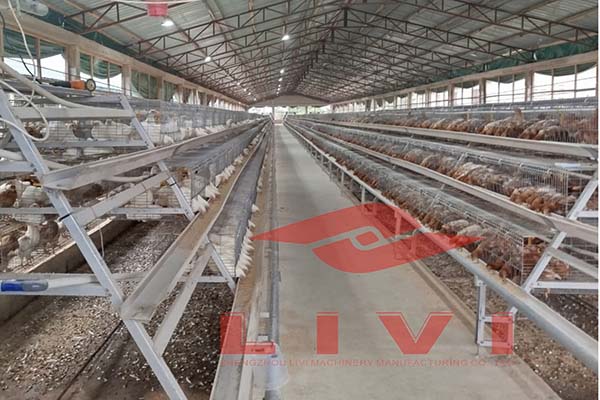
Livi Chicken Cage Data: Verified vs To Be Confirmed
| Item | Verified LIVI Information | Status for the 2,000-Bird Ghana Plan |
|---|---|---|
| Product identity | A-Type Chicken Cage, code ABKE-007 | Confirmed |
| Stated application scale | 5,000–30,000 birds | 2,000 is below this range; LIVI confirmation required |
| Material and treatment | Q235 steel; hot-dip galvanized | Confirmed |
| Design service life | 15–20 years as stated by LIVI | Depends on site and maintenance |
| Structure and support systems | A-type tiered structure with smart feeding and cleaning systems | Scope defined per house |
| Trade terms | FOB and CIF quotation methods available | Terms agreed per order |
| To confirm before production | Tier count, capacity per unit, row layout, house dimensions, automation level, voltage and frequency, warranty terms | Open |
Reference Scenario: LIVI Burkina Faso 5,000 Layers + 5,000 Pullets
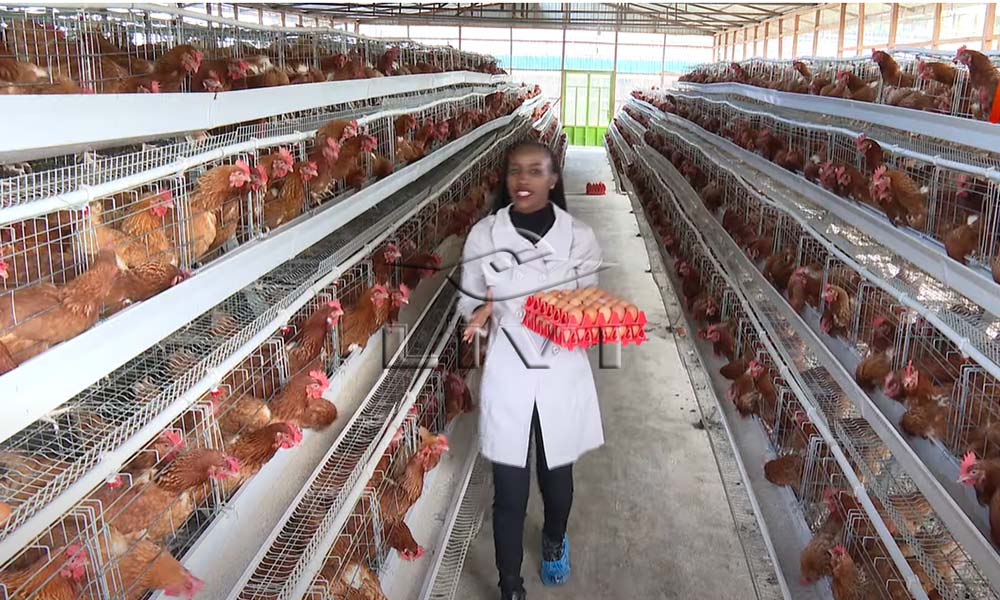
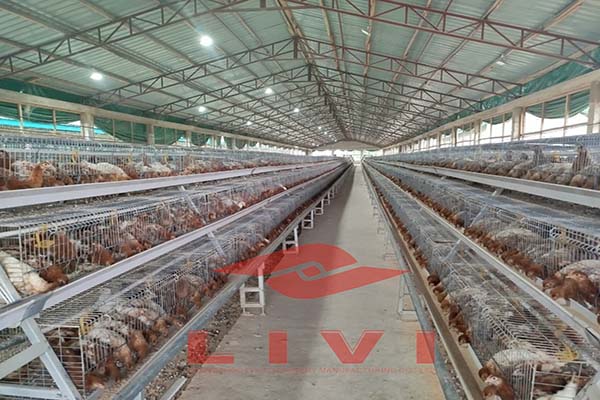
The verified LIVI reference is a Burkina Faso farm built as two units: 5,000 layers and 5,000 pullets in separate houses. The layer unit used a 38 × 8 × 4 m house with 1950 × 350 × 380 mm A-Type layer cages; the pullet unit used a 42 × 8 × 3.5 m house with 1950 × 500 × 350 mm A-Type pullet cages, on a 380V supply. The transferable lesson is planning logic: flock stage drives layout, not bird count. In hot conditions ventilation belongs in the core design, and ammonia in closed houses is commonly managed below 25 ppm (ammonia in poultry housing).
Compare Your Plan With a Verified Poultry Farm Reference
Tell us how your 2,000-bird plan compares with the verified Burkina Faso layer and pullet project, and LIVI will help you identify what still needs site confirmation.
Transport, Site Receiving, and Utility Boundaries
LIVI quotations can be issued on FOB or CIF terms, so the port of entry and final delivery point in Ghana must be agreed before shipment planning. No Ghana transport, duty, or installation cost figures are supplied. Site receiving requires road access, a safe unloading area, and dry storage for cage components. Water availability and power reliability influence the automation level, and the Burkina Faso 380V reference must not be copied. Poultry by-products must be managed to protect soil, water, and air quality at any flock size (management and housing).
Implementation Steps
Confirm flock type, bird number, house dimensions, and automation level with LIVI before production. Verify site access, unloading area, water source, power supply, and secure storage. Finalize tier configuration, row layout, and supporting equipment. Install frames, tiers, feeding and drinking lines, and manure handling equipment per the approved drawing. Complete electrical connections, commission the system, train staff, and confirm warranty terms. LIVI supports this from farm planning through production, cross-border delivery, installation and commissioning, training, and long-term service.
FAQ
Is a 2,000-bird Livi Chicken Cage project in Ghana a sensible starting scale?
Yes, when egg market access, feed, water, power, and labor are verified. Because the A-Type Chicken Cage is documented for 5,000–30,000 birds, a 2,000-bird layout needs LIVI confirmation. Plan utilities for a larger final capacity if expansion is expected.
Why is 2,000 birds below the stated scale of the LIVI A-Type Chicken Cage?
LIVI's published parameter lists an application scale of 5,000–30,000 birds. That range describes documented application, not a physical limit, and cage count still depends on tier configuration and capacity per unit. A 2,000-bird requirement is reviewed as a customized configuration.
How much does a 2,000-bird Livi Chicken Cage cost in Ghana?
No verified Ghana price is supplied, so no figure can be quoted. Cost inputs depend on tier configuration, automation scope, house dimensions, quantity, packing, destination port, and FOB or CIF terms. A useful request states bird number, flock type, house size, and utilities.
How much labor does a 2,000-bird layer house in Ghana require?
No verified labor figure for a 2,000-bird house is supplied, so a headcount cannot be stated. Demand depends on how feeding, drinking, manure handling, and egg collection are performed. Mapping daily task flow shows which operations justify automation.
Can a 2,000-bird poultry project in Ghana be expanded later?
Yes, phased expansion works when site layout, water supply, power capacity, and service routes are not locked to the first phase. Expansion may require a different cage type or house width, so discuss long-term scale before construction.
Planning a Similar 2,000-Bird Project in Ghana?
TAGs: Livi Chicken Cage Ghana, 2,000-bird layer project Ghana, A-Type Chicken Cage ABKE-007, A-Type brooding equipment for pullets, starter commercial layer farm planning, Burkina Faso layer and pullet reference







