
Livi Poultry House Equipment: A-Frame Layer vs Pullet Cage Comparison for 10,000-Bird Replacement Flock Farms
Planning a 10,000-bird poultry project with 5,000 layers and 5,000 pullets requires more than adding two cage systems. Livi Poultry House Equipment supports a coordinated replacement flock model in which the pullet house raises the next layer flock while the layer house produces eggs. This article compares A-frame layer and pullet cage configurations based on a Burkina Faso project with a 38 × 8 × 4 m layer house and a 42 × 8 × 3.5 m pullet house.
Quick Answer
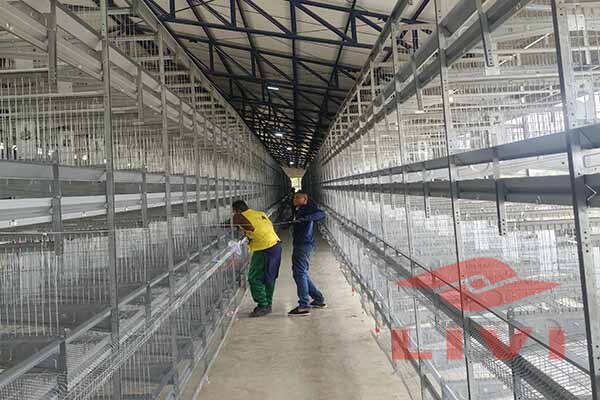
- 5,000 layers + 5,000 pullets = 10,000 total birds, but the two groups require different cage types, house sizes, and management.
- Layer unit: 38 × 8 × 4 m house using 1950 × 350 × 380 mm A-frame layer cages.
- Pullet unit: 42 × 8 × 3.5 m house using 1950 × 500 × 350 mm A-frame pullet cages.
- 380V power supply is confirmed for the Burkina Faso project.
- The design priority is a coordinated replacement flock flow: pullets → transfer → layers → eggs → next cycle.
A-Frame Layer vs Pullet Cage Specification Snapshot
| Parameter | Layer Production Unit | Pullet Rearing Unit |
|---|---|---|
| Country | Burkina Faso | Burkina Faso |
| Capacity | 5,000 layers | 5,000 pullets |
| House dimensions | 38 × 8 × 4 m | 42 × 8 × 3.5 m |
| Cage type | A-frame layer cage | A-frame pullet cage |
| Cage dimensions | 1950 × 350 × 380 mm | 1950 × 500 × 350 mm |
| Production role | Commercial egg production | Replacement bird rearing |
| Power supply | 380V | 380V |
Tier configuration, exact cage quantity, and complete automation quantities are not specified in the source project and must be finalized with LIVI during layout design.
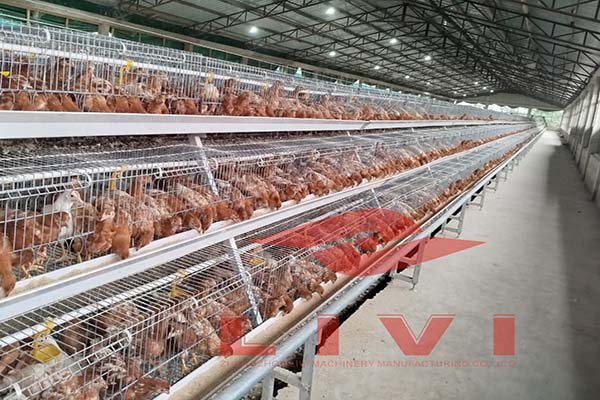
Why Two A-Frame Cages for 5,000 Layers + 5,000 Pullets
A farm that rears its own replacement pullets needs two separate production environments. The layer house focuses on daily egg output, while the pullet house develops the next batch of birds that will eventually move into the layer house. This creates a continuous flow:
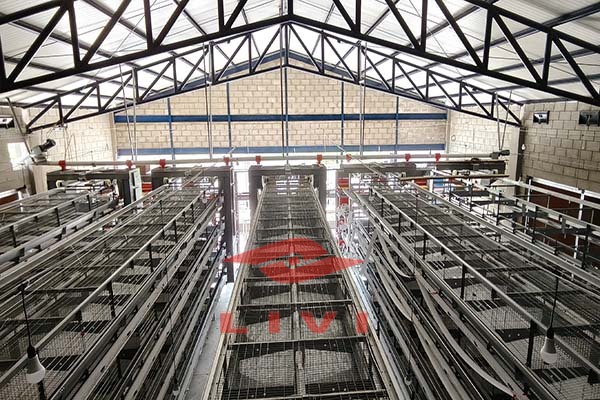
Pullets → transfer → layers → eggs → next pullet cycle
The two cage dimensions reflect the different bird development stages:
- 1950 × 350 × 380 mm is an A-frame layer cage for adult egg production.
- 1950 × 500 × 350 mm is LIVI's standard A-frame pullet cage size for young bird rearing.
House lengths also differ because cage depth, final tier structure, and supporting equipment change the required space. The pullet house is 42 m long, while the layer house is 38 m long. A farmer should not simply divide 10,000 birds by one assumed cage capacity. The correct design sequence is:
Bird development stage → cage type → tier configuration → per-set capacity → cage layout → final quantity
A-frame cage systems are practical for this moderate scale. According to LIVI published comparison data, A-type layer systems are positioned for 10,000–30,000 bird operations, while A-type pullet systems are discussed for approximately 5,000+ birds. H-type systems are generally used for larger, higher-density projects.
Illustrative Case: 5,000 Layers + 5,000 Pullets in Burkina Faso
The Burkina Faso project includes two separate houses:
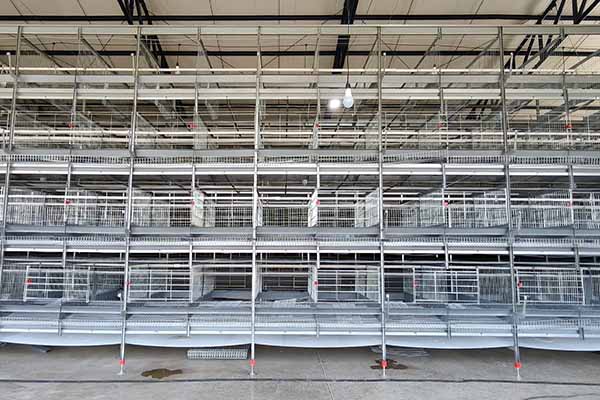
- Layer house: 38 × 8 × 4 m, using 1950 × 350 × 380 mm A-frame layer cages.
- Pullet house: 42 × 8 × 3.5 m, using 1950 × 500 × 350 mm A-frame pullet cages.
Confirmed power supply is 380V. Automation level is still to be finalized based on labor availability and budget. The focus of this reference scenario is the replacement flock flow: pullets are reared in the pullet house and later transferred to the layer house, supporting continuous egg production. No customer name, results, or evaluation are provided; this case is based only on the verified project configuration.
Replacement Flock Flow and Farm Zoning
The most important material flow in this farm is not feed or eggs—it is the movement of replacement birds. The pullet house must produce birds ready for transfer when the layer house needs them. This requires planning the route between the two houses, cleaning and preparing the receiving house before transfer, and managing equipment compatibility. Separate buildings provide physical isolation, but workers, tools, and vehicles can still connect the two production areas, so biosecurity requires operational discipline.
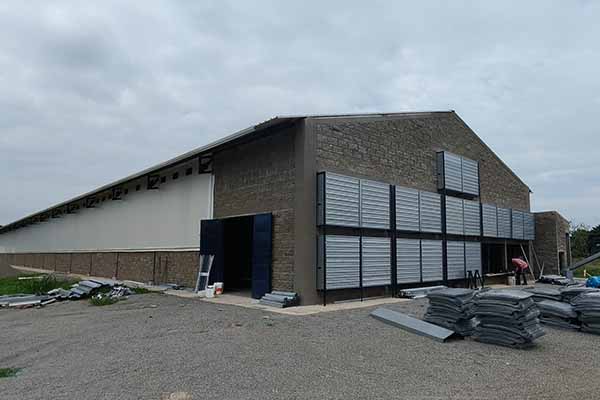
A practical site plan should reserve functional areas beyond the two bird houses. These may include feed storage, water supply/storage, egg handling, manure handling, equipment storage, power/backup area, staff hygiene point, and controlled vehicle access. These are planning considerations, not confirmed equipment for the Burkina Faso project.
Automation Decisions per House
Automation should be evaluated separately for each house based on repetitive tasks, labor availability, and investment priority. Not every house needs the same level of mechanization.
- Feeding: Both houses can benefit from automatic feeding to reduce daily labor.
- Drinking: Nipple drinking systems are common in both layer and pullet houses.
- Manure removal: Automatic manure removal may be justified in both houses to improve hygiene and reduce labor.
- Egg collection: Only the layer house needs automatic egg collection.
- Bird transfer: The pullet house must be equipped for smooth transfer of pullets to the layer house.
LIVI can map the daily workflow for each house and recommend which systems to mechanize at the planned 5,000-bird scale.
Transportation and Logistics Planning
Before shipping Livi Poultry House Equipment to the Burkina Faso project site, the final equipment layout should be confirmed to optimize container loading and on-site offloading. On-site storage and handling areas should protect cage components from damage before installation. Access routes must accommodate delivery vehicles and container turning requirements. Packaging and shipping terms should be confirmed with LIVI for the specific project.
Installation and Implementation Steps
- Confirm final cage layout and tier configuration with LIVI before production.
- Prepare level house floors, structural clearances, and utility connections (water and electricity).
- Install A-frame cage rows in each house according to the approved layout.
- Mount feeding, drinking, manure removal, ventilation, and environmental control equipment.
- Test electrical systems using the confirmed 380V supply.
- Conduct trial run, train staff, and hand over operating documentation.
How LIVI Supports A-Frame Poultry House Equipment Projects
Livi Poultry House Equipment projects benefit from LIVI's 13 years of poultry equipment manufacturing experience. The factory is located in Zhengzhou, Henan, China, and serves commercial poultry markets in Africa, Middle East, Southeast Asia, South America, Central Asia, and Europe.
LIVI offers A-type layer cages, A-type pullet cages, automatic feeding, automatic drinking, automatic manure removal, automatic egg collection, automatic ventilation, and automatic environmental control systems. Design support coordinates cage rows, aisles, feeding, drinking, manure removal, ventilation, and environmental control systems to match specific house dimensions and production plans.
After-sales support includes installation guidance, operator training, and technical support, along with assistance for future capacity expansion planning.
Buyer Decision Checklist
- Will the farm rear replacement pullets long-term? This determines the need for a dedicated pullet facility.
- Are both houses already built? This affects layout flexibility.
- What tier configuration will be used? This determines cage capacity and installation height.
- What level of automation is planned? This changes labor, power, and space requirements.
- How will birds move between houses? This affects transfer and biosecurity planning.
- How will feed, manure, and eggs be handled? These affect daily labor and farm traffic.
- Is 380V power stable? This is critical for motorized systems.
- Is future expansion expected? This affects site spacing and utility capacity.
FAQ
Is a 5,000 layer + 5,000 pullet farm the same as a 10,000 layer farm?
No. Total bird count is 10,000, but only 5,000 are layers; the other 5,000 are replacement pullets at a different production stage. Layer and pullet units require different cage systems, house sizes, and management.
Why does the pullet house use 1950 × 500 × 350 mm cages while the layer house uses 1950 × 350 × 380 mm?
1950 × 500 × 350 mm is LIVI's standard A-frame pullet cage size for growing replacement birds. 1950 × 350 × 380 mm is the A-frame layer cage size for adult egg production. Different dimensions reflect different bird development needs and space requirements.
How many cages are needed for 5,000 layers?
The confirmed project information does not include tier configuration or exact cage count. Layer cage dimensions allow multiple tier options; final count depends on tiers per set and layout. LIVI calculates cage quantity after confirming house layout and tier configuration.
Should both houses use the same automation level?
Not necessarily. Automation should be evaluated per house based on labor availability, repeatable tasks, and investment priority. Feeding and manure removal may justify automation in both houses, but egg collection is only needed in the layer house. LIVI can map daily workflows to recommend which systems to mechanize.
Is 380V enough to configure all electrical equipment?
380V is the confirmed project voltage, but frequency and phase must also be confirmed. Total power demand depends on final automated equipment selection. Before production, finalize automation level to determine electrical capacity and backup needs.
CTA
Planning a replacement flock farm with separate layer and pullet houses? Share your target capacity, house dimensions, local power conditions, and desired automation level with LIVI for a coordinated A-frame cage design and quotation.
Livi Poultry House Equipment designs are built around your production cycle, not just cage capacity. From the layer house to the pullet house and the transfer route in between, LIVI helps you create a single coordinated system for continuous egg production.







