
10,000-Bird Dual-Unit Poultry Farm in Ghana: Operational Risks, Labor Trade-offs, and Lifecycle Outcomes for A-Type Layer and Pullet Housing
Quick Answer A 10,000-bird dual-unit layer and pullet farm in Ghana should not be designed as one 10,000-layer project. The 5,000-layer unit produces eggs; the 5,000-pullet unit raises the next replacement flock. In a reference Burkina Faso project with the same structure, the layer unit used a 38×8×4 m house and A-type layer cages measuring 1950×350×380 mm, while the pullet unit used a 42×8×3.5 m house and A-type pullet cages measuring 1950×500×350 mm. The reference power supply was 380 V. For Ghana, house dimensions, tier configuration, ventilation strategy, and automation scope must be confirmed per site before selecting poultry house equipment for 10000 birds in Ghana.
Why Dual-Unit A-Type Housing Requires a Different Planning Logic in Ghana
A-type systems are widely applicable for medium commercial layer projects and pullet rearing, but they are not automatic defaults for every 10,000-bird farm. The decision to use A-type layer and pullet housing in Ghana should follow bird development stage, available building width, labor supply, investment budget, manure management method, ventilation strategy, and future expansion. A-type layer cages are commonly used in 10,000–30,000 bird projects, while A-type pullet cages are discussed for around 5,000 pullets or more. However, a 5,000-layer + 5,000-pullet project is not simply a 10,000-layer farm; each unit has a different biological function.
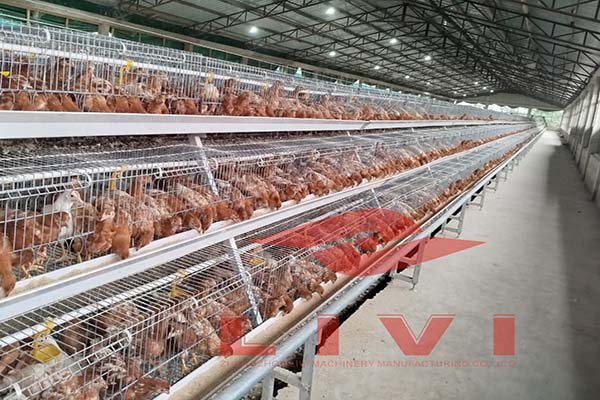
Automation choices should be driven by where labor is repeatedly used: feeding, watering, manure removal, egg collection, and bird transfer. Two separate houses also mean two management environments, two biosecurity zones, and two sets of environmental requirements. Climate and house design in Ghana matter as much as cage selection; heat management, ventilation, and building orientation must be confirmed for each site before finalizing poultry house equipment for 10000 birds in Ghana.
Reference A-Type Dual-Unit Project Specifications
The following specifications come from a verified Burkina Faso dual-unit project and are provided as a planning reference for Ghana. Ghana projects require local site confirmation.
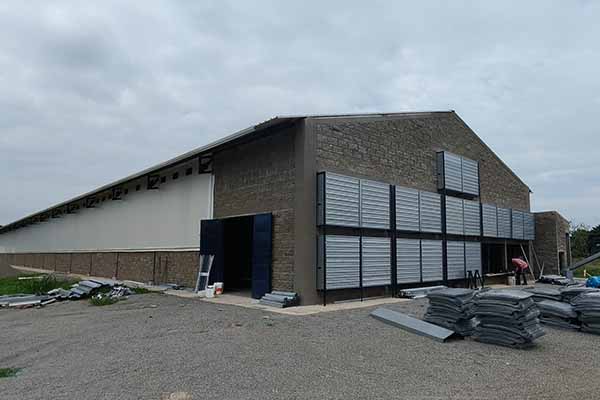
| Specification | Layer Unit | Pullet Unit |
|---|---|---|
| Country / farm scale | Burkina Faso reference, adaptable to Ghana | Burkina Faso reference, adaptable to Ghana |
| Capacity | 5,000 layers | 5,000 pullets |
| House dimensions | 38×8×4 m | 42×8×3.5 m |
| Cage type | A-type layer battery cage | A-type pullet battery cage |
| Cage dimensions | 1950×350×380 mm | 1950×500×350 mm |
| LIVI product code | ABKE-007 | ABKE-012 |
| Power supply | 380 V | 380 V |
The exact number of cage sets cannot be calculated from bird count alone. Tier configuration, cage doors per set, row spacing, and house dimensions must be confirmed first.
Flock Cycle: 5,000 Pullets Supporting 5,000 Layers
In the reference Burkina Faso project, the pullet house raises the next replacement flock while the layer house produces current eggs. The production flow is: pullet rearing → transfer → layer production → next cycle. Bird transfer from pullet to layer house must be planned with clean routes, equipment compatibility, and cleaning time between batches. Layer and pullet houses do not automatically share the same ventilation, feed, or manure settings; each unit is evaluated by bird age. The total 10,000-bird capacity does not mean 10,000 layers; lifecycle planning is centered on replacement, not just stocking density.
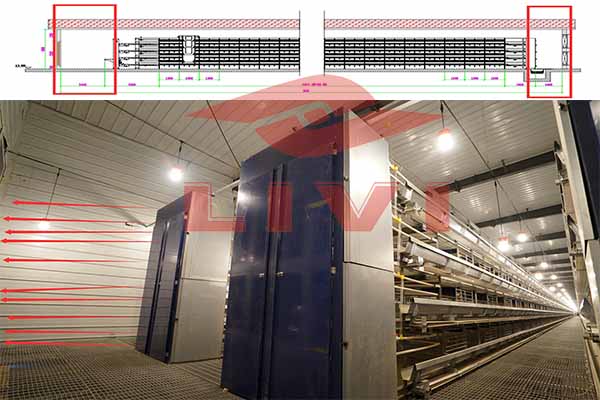
Selecting Poultry House Equipment for 10000 Birds in Ghana: Layer Unit vs Pullet Unit
For the 5,000-layer unit, A-type layer battery cages such as LIVI ABKE-007 are designed for adult egg production. For the 5,000-pullet unit, A-type pullet battery cages such as LIVI ABKE-012 are designed for young bird rearing. The different cage dimensions (1950×350×380 mm vs 1950×500×350 mm) reflect different bird body size, feeding, and movement requirements at each stage.
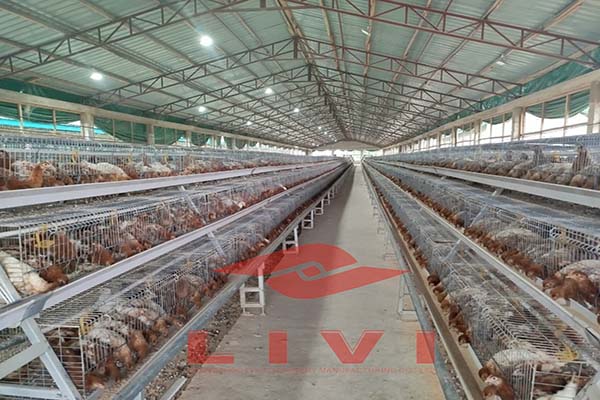
Automation for each unit should be evaluated separately. A 5,000-bird scale may justify different automation than a 30,000-bird project. Tasks performed daily and labor-intensive, such as feeding, watering, manure removal, and egg collection, are stronger candidates for mechanization. Before selecting equipment, LIVI can map the daily flock workflow for each house separately and identify where automation reduces repeated labor without creating avoidable power dependency.
Available systems include automatic feeding carts, auger feed conveying, manure belts, ventilation, and environmental control. However, selection depends on labor conditions, power stability, and investment priority. In a dual-unit farm, the layer house and pullet house should not automatically share identical automation levels.
Climate, House Design, and Electrical Considerations in Ghana
Ghana's warm climate makes heat management a central design factor. Building orientation, sidewall openings, airflow path, and bird age must be evaluated for each house separately. Pullets and layers have different environmental needs; a growing flock is more sensitive to temperature swings than an adult layer flock.
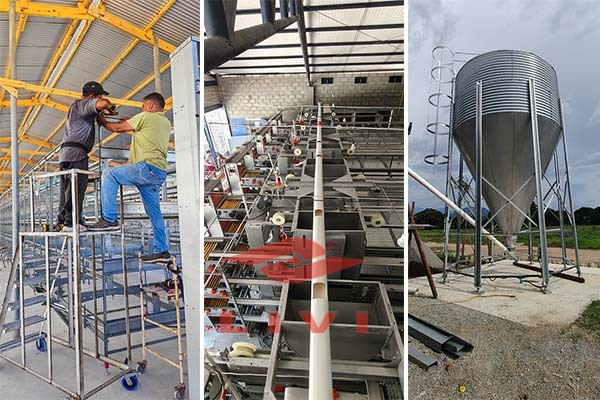
The reference project supply is 380 V, but voltage alone is not enough to specify poultry house equipment for 10000 birds in Ghana. Frequency, phase, connected load, and power stability must be checked before selecting motors, feeders, ventilation, and environmental controllers. Automation increases connected load and backup power requirements; a mostly manual A-type cage farm has a different electrical profile than one with powered feeding, manure belts, and fans.
Transportation and Site-Handling Considerations for Ghana
Final container count and shipping method depend on the confirmed cage layout, tier configurations, and automation scope. Galvanized cage panels and A-type frames should be protected from moisture and handled to avoid bending before installation. Site access roads, offloading space, and storage area must be ready before containers arrive. Local customs, duties, and transport from port to farm must be confirmed for the specific Ghana location. LIVI can provide coordination for transportation, installation, and technical guidance based on the final equipment list.
Buyer Decision Checklist for a Ghana 10,000-Bird Dual-Unit Farm
- Will replacement pullets be raised on-farm long-term? This determines whether a dedicated pullet unit is necessary.
- Are the two houses already built, or can layout be adjusted before construction?
- What tier configuration will be used for each unit? This determines cage capacity and installation height.
- What automation level is planned for feeding, watering, manure removal, and egg collection in each house?
- How will birds transfer between the pullet and layer houses with minimal biosecurity risk?
- Is the local power supply stable, and what are the voltage, phase, and frequency details?
- What are the water quality, storage, and pressure conditions for both houses?
- Does the site footprint allow future expansion without blocking service routes?
Frequently Asked Questions
Is a farm with 5,000 layers + 5,000 pullets the same as 10,000 layers? No. Only the 5,000-layer unit produces eggs. The 5,000 pullets are replacement stock in a different production stage. Both units require different cage systems, housing, and management, so the farm cannot be planned as one 10,000-layer house.
Why are different A-type cage dimensions used for layers and pullets? Layers use 1950×350×380 mm cages designed for adult egg production; pullets use 1950×500×350 mm cages designed for young bird rearing. The different cage depth and height reflect different bird body size, movement, and feeding requirements at each stage.
How many A-type cages are needed for 5,000 layers? The final number cannot be calculated from bird count alone. You must confirm the tier configuration, cage doors per set, row spacing, and house dimensions before LIVI can provide the cage quantity.
Should the layer house and pullet house have the same automation level in Ghana? Not necessarily. Evaluate feeding, watering, manure removal, and egg collection separately for each house based on labor availability, power stability, and daily task frequency. A 5,000-bird scale may justify different automation than a 30,000-bird project; map the daily workflow first.
Is 380V enough to configure all poultry house equipment in Ghana? No. 380 V is the verified reference voltage, but voltage alone is not enough for equipment specification. Frequency, phase, connected load, and power stability must be checked before selecting motors, feeders, and ventilation systems.
What should be planned first: the house or the cage layout? They should be planned together. Cage dimensions, tiers, row width, and aisles affect usable building dimensions. Coordinating layout before construction reduces clearance, access, and retrofit risks in Ghana projects.
Get a Coordinated Farm Plan
Planning a 10,000-bird dual-unit layer and pullet farm in Ghana? Share your target bird count per unit, existing or planned house dimensions, local power supply (voltage, phase, frequency), and preferred automation level. LIVI will map the daily flock workflow and provide a coordinated A-type cage and equipment plan for both units — including feeding, drinking, manure handling, ventilation, and after-sales support.







