
Quick Answer: What This 20,000-Layer Site Checklist Covers
A 20,000-layer poultry farm in Nigeria cannot be reduced to a single equipment list. Before selecting Livi poultry house equipment, investors must verify land dimensions, access roads, water yield and quality, electricity stability, drainage, and local climate data. The core equipment package may include layer cage systems, automatic feeding, drinking, manure removal, egg collection, ventilation, and environmental control—but every specification depends on site conditions. This checklist sequences the engineering decisions so that house construction, cage layout, and automation are aligned from the start.
Why a Site Assessment Must Precede Equipment Selection for a 20,000-Layer Nigeria Farm
Nigeria's tropical climate makes heat and humidity management a core design factor. Poultry house orientation, roof insulation, and ventilation capacity must be evaluated before selecting cage rows. A 20,000-layer operation can use either A-type or H-type layer cage systems; the final choice depends on available building width, labor availability, investment budget, and desired automation level. Water quality, electricity supply stability, and road access also affect feeding, drinking, manure removal, and emergency response. Livi Machinery begins with project planning and equipment configuration matched to the customer's real conditions, rather than offering a standard package.
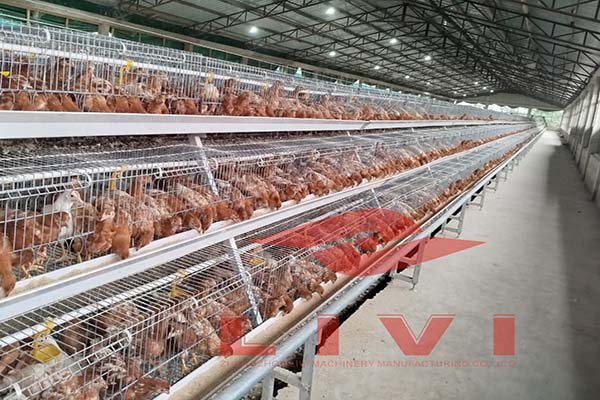
Recommended 20,000-Layer Poultry House Equipment Checklist for Nigeria
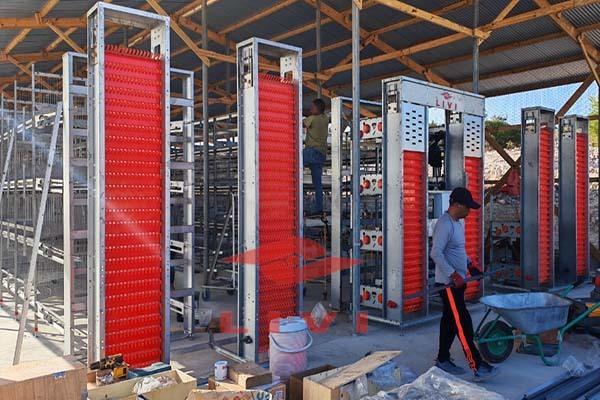
| Equipment Category | Key Verification Point for Nigeria Site |
|---|---|
| Poultry house structure | Verify available length, width, height, orientation, and construction material. |
| Layer cage system | Confirm A-type or H-type selection based on house width and labor/automation goals; 20,000 birds require multiple rows and tiers. |
| Automatic feeding system | Check feed storage location, conveying distance, and power stability. |
| Automatic drinking system | Confirm water source, pressure, and filtration needs. |
| Manure removal system | Choose belt or scraper type based on house layout and waste handling plan. |
| Egg collection system | Plan manual or automatic collection based on labor cost and investment. |
| Ventilation and cooling | Verify fan placement, air inlet design, and cooling pad sizing for Nigeria's hot periods. |
| Environmental control system | Check sensor integration, alarm systems, and backup power. |
Applying the Checklist to a Proposed 20,000-Layer Farm in Nigeria
For a proposed 20,000-layer project in Nigeria, an investor might begin with a site of less than one hectare. Before finalizing the house, the buyer must confirm exact plot dimensions, road access for feed and egg trucks, borehole yield, and whether three-phase power is available. If a 90 m × 12 m enclosed house is feasible, the next discussion with Livi is whether an H-type layer cage system in four tiers fits the available width, labor plan, and automation budget. This leads to selecting automatic feeding, nipple drinking, belt manure removal, tunnel ventilation, and an environmental controller with temperature and humidity sensors. Final quantities, fan sizes, and electrical loads are calculated only after site data is confirmed; this is a decision framework, not a quotation.
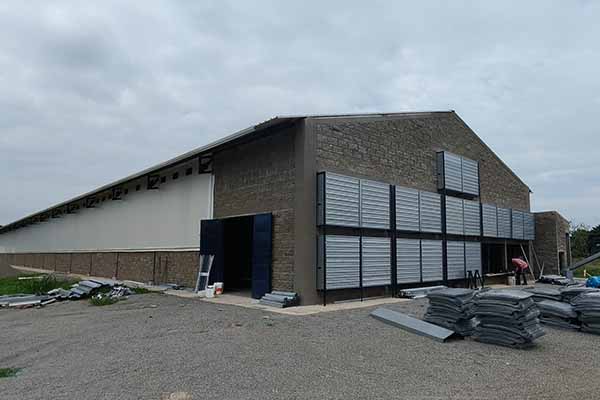
Why Climate Control Must Be Designed with the House
In Nigeria, high temperatures and humidity can reduce feed intake, lower egg production, and increase mortality if ventilation is inadequate. The equipment package should be configured with ventilation and cooling systems suited to tropical conditions. Environmental controllers manage temperature, humidity, and airflow, but fan quantity and cooling pad area must be calculated from site-specific heat load. Galvanized cage components resist corrosion in high-humidity environments, supporting longer service life in coastal or humid regions.

Automation Decisions for a 20,000-Layer Farm
Automation is not an all-or-nothing choice. Buyers should evaluate repetitive labor tasks: feeding, drinking, manure removal, egg collection, and environmental monitoring. Automatic feeding reduces daily labor and improves feed distribution, while automatic drinking ensures consistent water access. Belt manure removal keeps the house cleaner and reduces ammonia, and automatic egg collection lowers labor and egg breakage. The final level of automation should be selected after mapping daily workflows with Livi, because over-automation increases capital and electrical load, while under-automation raises operating costs.
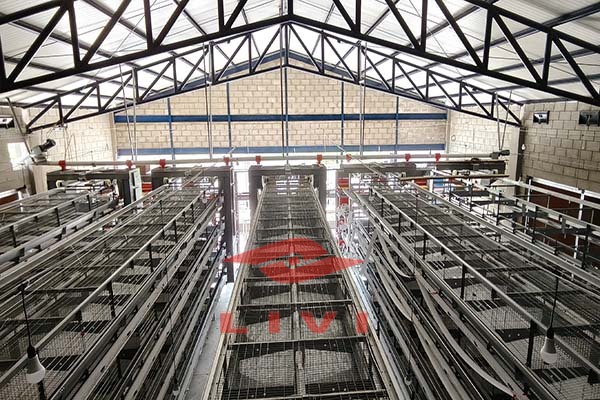
Utility and Infrastructure Verification
Three-phase power availability is essential for motorized feeding, manure removal, and ventilation. Confirm voltage, frequency, and phase. Calculate total electrical load after equipment selection, and plan a backup generator or solar option for critical ventilation and drinking systems. Water source quality, daily yield, pressure, and filtration must support 20,000 layers. Road access should allow feed delivery, egg collection, and manure evacuation without crossing production areas.
Installation and Commissioning Support
Livi Machinery supports installation guidance, commissioning, training, and after-sales service as part of its full-process solution. Typical installation steps include:
- Complete site survey, ground leveling, foundation dimensions, and house orientation.
- Assemble and level cage frame rows according to approved layout drawings.
- Install automatic feeding and drinking lines with correct slope and pressure.
- Install manure removal belts or scrapers and test motor direction.
- Install ventilation fans, cooling pads, and environmental control sensors.
- Connect electrical wiring and backup power to all motorized equipment.
- Test all systems together, conduct staff training, and hand over operation manuals.
Transportation and Logistics Planning for a 20,000-Layer Poultry House in Nigeria
Livi Machinery's fulfillment modes include direct shipment, local production, overseas warehouse, and local distribution. The factory in Zhengzhou, China, prepares export packing to protect galvanized components from corrosion during sea freight. Buyers should confirm the Nigerian port of destination, containerized shipping for cage frames and equipment, inland transport routes, and offloading equipment at the farm. Customs documentation, import duties, and local clearing agents are buyer-side responsibilities unless otherwise agreed.
Buyer Decision Questions Before Finalizing Equipment
- Has the site been surveyed for exact dimensions, orientation, and soil bearing capacity?
- Is three-phase power stable, and what backup power will protect ventilation and drinking systems?
- What is the daily water yield and water quality from the borehole or supply?
- Will the house use A-type or H-type layer cages, and how many tiers are planned?
- Which tasks—feeding, drinking, manure removal, egg collection—should be automated first?
- How will birds, feed, eggs, and manure move through the farm without crossing contamination routes?
- What is the expected future expansion, and will the site layout and utilities support it?
Frequently Asked Questions
1. What should be on the site assessment checklist before buying equipment for 20,000 layers in Nigeria?
The checklist includes land size, shape, orientation, road access for feed and egg trucks, water source quality and daily yield, electricity supply stability and phase/voltage, and drainage and soil bearing capacity.
2. Which cage system is better for a 20,000-layer poultry house in Nigeria: A-type or H-type?
H-type allows higher density and more automation per floor area. A-type may be simpler and lower cost for medium-scale operations. The final choice depends on house width, labor cost, and future expansion. Compare on total cost of ownership, not cage price alone.
3. How does Livi poultry house equipment support the Nigerian climate?
Equipment can be configured with ventilation and cooling systems suited to tropical conditions. Environmental control packages manage temperature, humidity, and airflow. Final fan and cooling pad sizing must be calculated from site-specific heat load. Galvanized cage components resist corrosion in high-humidity environments.
4. What installation support does Livi Machinery provide for a 20,000-layer project?
Livi provides installation guidance and technical support as part of its service. Steps include cage assembly, feeding/drinking installation, electrical connection, and testing. On-site or remote support depends on the project agreement, and training is provided for farm staff.
5. What electrical and backup power planning is needed for automated equipment?
Confirm three-phase power availability and voltage at the site. Calculate total electrical load after equipment list is finalized. Include a backup generator or solar options for critical ventilation and drinking systems, and use voltage stabilizers if grid power is unstable.
Conclusion and Next Step
A 20,000-layer poultry house in Nigeria is a substantial investment that should be planned as an integrated system. By completing a site and engineering checklist before equipment purchase, investors reduce the risk of mismatched house dimensions, inadequate ventilation, or power shortages. Livi poultry house equipment for 20,000 layers in Nigeria can be configured to the specific house layout, climate, and automation goals—but only after site data is confirmed. Send Livi Machinery your Nigeria site coordinates, planned house dimensions, power supply details, and target automation level to turn this checklist into an engineering quotation.






