
A 20,000-layer Ghana project is first an economic viability question, not cage count. Validate egg sales, delivered feed cost, labor, water, power, site access, and biosecurity before comparing Livi Layer Battery Cage configurations. The Burkina Faso 5,000-layer plus 5,000-pullet solution is a planning reference only; no Ghana prices, house dimensions, yields, or returns are available. Clean water and good-quality feed are essential for birds to reach production potential.
Project Solution at a Glance
- Target market: Ghana; planning scale: 20,000 birds.
- Buyer stage: decision—whether to start, what model, and at what scale.
- Equipment focus: Livi Layer Battery Cage; automation scope to define.
- Reference only: Burkina Faso 5,000 layers + 5,000 pullets; not Ghana data.
- First task: confirm local egg and feed economics before cage selection.
Planning a Similar Poultry Project?
Share your Ghana site location, target layer capacity, poultry-house dimensions, power and water conditions, automation level, and egg sales route so LIVI can help screen the project.
Quick Answer: What to Verify Before Selecting a Livi Layer Battery Cage
A 20,000-layer Ghana project cannot be approved by cage count alone. Confirm egg market channels, delivered feed cost, labor, water, power, site access, and biosecurity. Livi Layer Battery Cage is not one fixed configuration: tier arrangement, house dimensions, automation scope, and whether the total includes replacement pullets must be defined first. LIVI can support screening, layout, automation planning, transport guidance, installation training, and after-sales only after verified project data are received.
Why Break-Even Screening Precedes Cage Configuration
Ghana investors must test minimum profitable scale before equipment selection. It depends on expected egg revenue versus variable costs like feed and labor plus fixed and capital costs. A 20,000-layer-only project differs from a self-rearing model, affecting house count, cage type, and capital phasing. Ghana climate, market, utility, and site conditions must be confirmed.
Reference Scenario: Burkina Faso 5,000 Layers + 5,000 Pullets
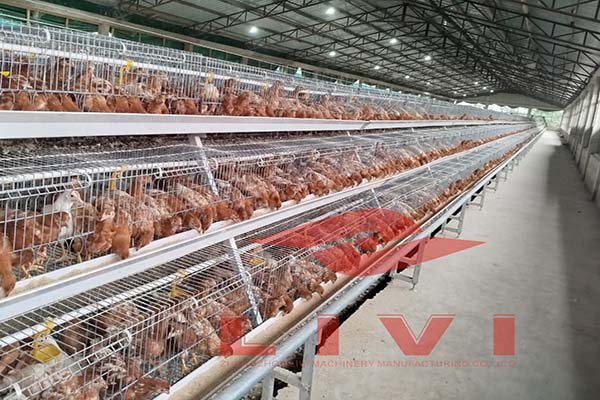
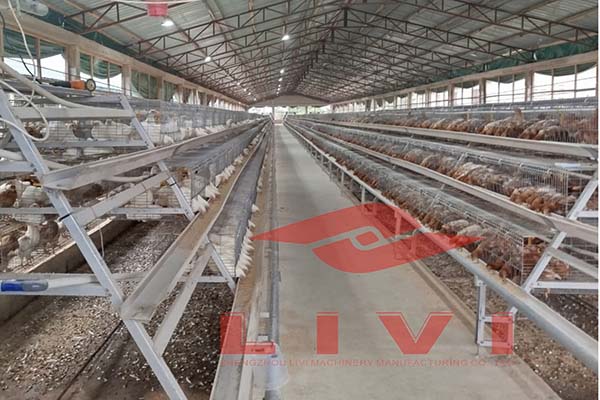
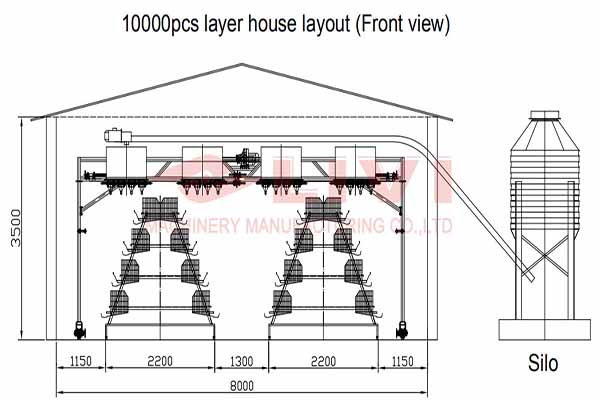
The reference uses a 38 × 8 × 4 with 1950 × 350 × 380 mm A-type layer cages and a 42 × 8 × 3.5 m pullet house with 1950 × 500 × 350 mm A-type pullet cages. Power is 380V; tier configuration, cage-set count, and full automation quantity are project-specific. Apply only bird-stage sequencing and replacement flow to Ghana, not dimensions or costs. No customer name, performance, investment result, or ROI is available.
Feasibility Reference Table
| Item | Verified reference / product data | Ghana feasibility must confirm |
|---|---|---|
| Decision context | Livi Layer Battery Cage, 20,000 layers | No verified Ghana specification. |
| A-type layer cage | 1950 × 350 × 380 mm, Burkina Faso | Tier configuration and cage count. |
| ABKE-012 brooding cage | Q235 steel; hot-dip galvanized; 15–20 years; 3–4 tiers; 144–288 chicks/set | Relevant only if self-rearing. |
| Power reference | 380V, Burkina Faso | Frequency, phase, stability, load, backup. |
| Automation | Feeding, drinking, manure removal, egg collection, ventilation, climate control | Depends on labor and budget. |
This table is screening reference, not a final Ghana list or layout.
Need a 20,000-Layer Equipment Configuration?
Tell LIVI whether the 20,000 birds are all production layers or include replacement pullets, plus your house size and climate conditions, and the team can prepare a conditional layout.
Transportation, Power, Water, and Site-Receiving Boundary
LIVI products can be quoted on FOB and CIF terms for ABKE-012; final Ghana freight, customs, taxes, and inland haulage are not supplied. The site needs truck/container access, storage, and installation space. In large flocks, automatic drinkers are typically used, but performance depends on water supply and pressure. Water must support drinking systems, and electricity must cover feeding, ventilation, lighting, and automated systems; backup power is separate. No Ghana-specific delivery time or landed cost can be stated.
What LIVI Can Support After Screening
After receiving project inputs, LIVI can prepare a conditional layout and automation plan. LIVI describes integrated capability from farm planning and customized solutions to production, cross-border delivery, installation/commissioning, training, and long-term service. ABKE-012 uses Q235 steel, hot-dip galvanizing, and 15–20-year service life if self-rearing chicks or pullets. Ghana-specific after-sales response time and spare parts coverage must be confirmed.
FAQ
What is the minimum profitable scale for a layer farm in Ghana?
No fixed minimum is verified. It depends on egg selling price, delivered feed cost, labor, mortality, power, and sales channel. Compare expected revenue with variable and fixed costs, including feed and labor, and confirm market access before deciding scale.
Is a 20,000-layer Livi Layer Battery Cage project the same as a 20,000-bird mixed layer and pullet project?
No. Twenty thousand production layers may need one layer house, while a self-rearing model may require a separate pullet-rearing unit. The Burkina Faso reference shows flock stage changes cage type, house size, and replacement-flow planning. Define first whether all birds are layers or include replacement pullets.
Should a 20,000-layer house in Ghana use A-type or H-type Livi Layer Battery Cage?
Not automatically. The choice depends on building width/height, automation level, labor availability, investment budget, and future expansion. Compare after receiving house dimensions and operational requirements; do not select cage system before confirming dimensions.
What information does LIVI need to screen a 20,000-layer Ghana project?
LIVI needs target capacity, whether layers only or layers plus pullets, house dimensions, site location, and climate. Also water availability, power voltage/frequency/phase/stability, desired automation scope, and budget range. No final layout, quantity, or quote can be prepared until these inputs are confirmed.
Is a 380V power supply enough to configure Livi Layer Battery Cage equipment in Ghana?
No. 380V is a voltage reference from Burkina Faso, not a complete Ghana electrical specification. Frequency, phase, grid stability, total load, motor starting, and backup power must be confirmed. Automation and motorized systems determine final electrical requirements.
What role does the Livi A-Type Brooding Battery Cage ABKE-012 play in a 20,000-layer project?
It is relevant if the Ghana project self-rears day-old chicks or pullets before transfer. ABKE-012 uses Q235 steel, hot-dip galvanizing, 3–4 tiers, and 144–288 chicks per set; required sets depend on pullet plan and house layout. It is not a substitute for an adult layer battery cage.
TAGs: Livi Layer Battery Cage, 20,000 layer battery cage Ghana, commercial layer farm Ghana, A-type layer cage system, poultry farm break-even screening, automatic poultry equipment Ghana







