
Project Solution at a Glance
| Item | Status |
|---|---|
| Production stage | Brooding |
| Capacity target | 2,000 chicks in the brooding stage |
| Representative LIVI product | A-Type Brooding Battery Cage (ABKE-012) |
| Verified product data | Q235 steel; hot-dip galvanized; 3–4 tiers; 144–288 chicks per set; independent compartments; customizable |
| Estimated cage-set range | About 7 to 14 sets by arithmetic, based on the verified 144–288 chicks per set; final count depends on tier configuration, house dimensions, and target stocking density |
| Trade terms available | FOB and CIF quotation methods through LIVI |
| Needs site confirmation | House length, width and height, number of rows, aisle space, feed and water systems, manure removal, heating, ventilation, power supply, labor plan, and flock transfer schedule |
Quick Answer: What Canada Buyers Must Confirm Before Choosing Livi Poultry Equipment for a 2,000-Bird Battery Cage House
A 2,000-bird brooding house is not simply a smaller version of a 2,000-layer farm. Before you request a Livi Poultry Equipment quote for a 2,000-bird battery cage house, define the production stage: are these day-old chicks entering a brooding room, pullets moving toward lay, or adult layers in egg production? Each stage requires different housing, equipment, and daily management.
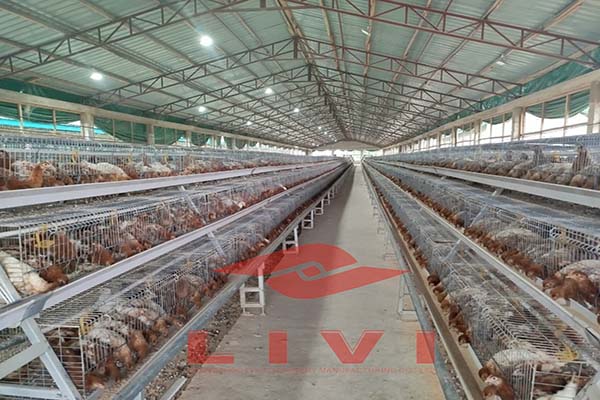
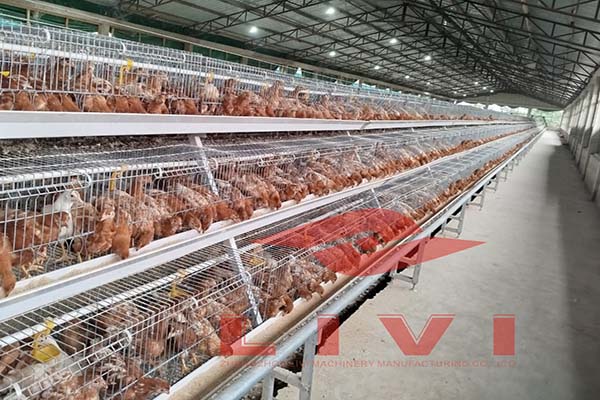
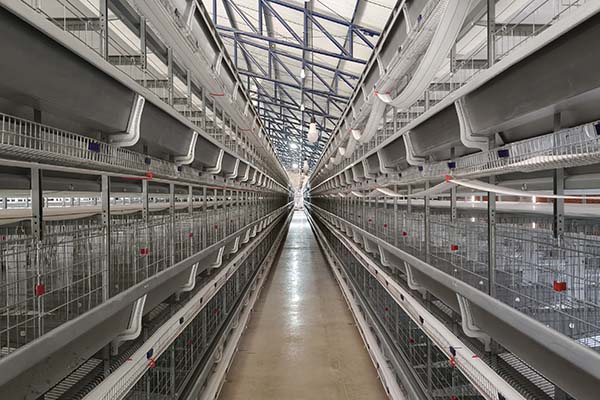
For a brooding room, the LIVI A-Type Brooding Battery Cage (ABKE-012) is a verified option. It is made of Q235 steel with hot-dip galvanized surface treatment, available in 3–4 tier configurations, and holds 144–288 chicks per set depending on the selected configuration. Its independent compartments are designed to support temperature adjustment, feed and water access, and waste management in smaller groups. That makes the cage useful for controlled chick rearing, but it does not replace the building’s heating, ventilation, cleaning, or biosecurity plan.
The key confirmation is not just the bird count. Share the brooding room dimensions, ceiling height, target chick age, stocking density, power supply, water source, and labor availability with LIVI so the ABKE-012 tier configuration, row layout, and supporting systems can be matched to your real farm operations.
Project Background: Why Labor and Brooding Risk Change the Equipment Selection Logic in Canada
A brooding room exists to supply the next production flock. Whether the chicks are raised for an on-farm pullet unit, sold as started pullets, or moved into a replacement layer program, the planning logic should follow the bird flow: chick placement, rearing, transfer, cleaning, and the next cycle.
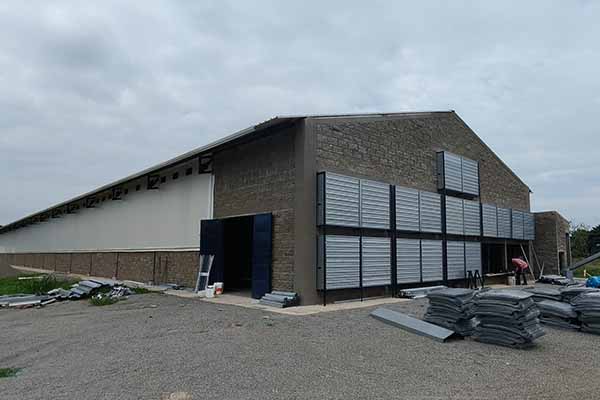
Brooding is labor-intensive and risk-sensitive. The repetitive tasks are feeding, drinker checks, manure removal, temperature monitoring, and bird inspection. Day-old chicks are especially vulnerable to temperature changes, uneven feed access, water hygiene problems, ammonia buildup, and drafts. In a cold-season Canadian facility, heating and air exchange need particular attention, but Canada-specific climate data, local codes, and heating requirements were not included in the verified inputs for this article. The environmental system must therefore be engineered from the real house and regional conditions.
The LIVI ABKE-012 compartment design is a management feature, not a substitute for climate design. Independent compartments help you keep smaller groups, inspect chicks, adjust feed and water access, and remove waste more controllably. When combined with a proper brooding environment, this can reduce crowding and support more even growth. But cage layout, house width, ceiling height, aisle space, ventilation, heating, and manure handling must be planned together before construction or modification.
In LIVI published reference material, A-Type systems are associated with smaller and medium commercial poultry projects, while H-Type high-density stacking systems are described for large-capacity operations. A 2,000-bird brooding room can be a practical fit for an A-Type arrangement, but the final decision should not be copied from another project. It depends on the available building width and height, labor supply, investment priorities, manure management approach, ventilation strategy, and future expansion plans. For a Canadian project, the equipment list should be confirmed against the actual brooding room and flock plan.
LIVI A-Type Brooding Battery Cage at a Glance (ABKE-012)
| Parameter | Verified specification | Planning implication |
|---|---|---|
| Material | Q235 steel | Provides structural support for multi-tier brooding rows |
| Surface treatment | Hot-dip galvanized | Corrosion protection for washdown and manure handling areas; product life is stated by LIVI as 15–20 years |
| Tier configuration | 3–4 tiers | Ceiling height and operator reach must be checked before choosing the number of tiers |
| Capacity | 144–288 chicks per set | Final set count depends on tier configuration, house dimensions, and target stocking density |
| Compartment design | Independent compartments | Supports temperature, feed, water, and waste control in smaller chick groups |
| Customization | Supported according to farming needs | Brooding room dimensions, bird age, and management preferences should be submitted in the initial request |
These are the verified ABKE-012 parameters. Cage-set quantity, row arrangement, and supporting automation are site-specific and should be finalized only after the brooding house and flock program are confirmed.
Planning Scenario: Using LIVI's Verified Burkina Faso Dual-House Reference for a 2,000-Bird Brooding Room
A verified LIVI solution in Burkina Faso illustrates replacement-flock planning logic. That project uses two coordinated A-Type houses: a 42 × 8 × 3.5 m pullet house for 5,000 pullets with 1950 × 500 × 350 mm A-Type pullet cages, and a 38 × 8 × 4 m layer house for 5,000 layers with 1950 × 350 × 380 mm A-Type layer cages. Confirmed power in that project is 380 V.
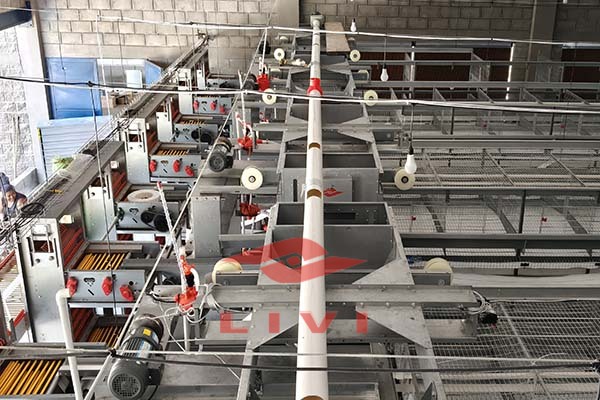
For a Canadian 2,000-bird brooding room, the useful takeaway is not the Burkina Faso house dimensions, climate assumptions, or electrical standard. Those conditions are different and must be confirmed for the Canadian site. The transferable lesson is the flock-flow logic: the rearing unit exists to supply the next production flock, so transfer age, cleaning schedule, and biosecurity routes should be designed in advance. A brooding battery cage room should be treated as one stage in a connected production cycle, not as an isolated housing count.
Which Daily Tasks Should Be Automated in a 2,000-Bird Brooding House?
Automation decisions should follow the workflows that consume labor daily. For a 2,000-bird brooding room, evaluate these four areas separately:
- Feeding: How is feed moved from storage to the chicks, and how often must troughs be checked?
- Drinking water: How is water delivered, cleaned, and monitored for pressure and drinker blockage?
- Manure removal: How often is manure removed from under the cage rows, and what route does it take out of the house?
- Climate and bird checks: How are temperature, airflow, chick behavior, and weak birds inspected?
More automation is not automatically better. If the farm has reliable labor, a manual or semi-automatic system may be the right investment level. If daily tasks compete with other farm responsibilities, feeding and climate monitoring are often the first candidates for mechanization. LIVI supplies feeding, drinking, manure removal, ventilation, environmental control, and egg collection equipment, but for a brooding house, feeding, drinking, heating, and manure handling should be discussed as one integrated workflow.
Does a Livi Battery Cage Replace Heating and Ventilation Design in Canada?
No. The LIVI A-Type Brooding Battery Cage supports bird density, hygiene, feed access, and water access, but the house environment must still be designed separately. Temperature stability and air exchange are critical for day-old chicks, especially during cold Canadian months. No verified Canadian ventilation fan size, heater capacity, or airflow specification was supplied for this product, so the brooding environment should be engineered by a qualified local designer based on the actual room, insulation, outdoor temperature range, and bird age plan.
Transportation and Site-Receiving Considerations for Livi Poultry Equipment in Canada
LIVI offers FOB and CIF quotation methods, so the buyer should state the required trade term when requesting a Livi Poultry Equipment package for a 2,000-bird brooding house. Packaging and shipping details for the ABKE-012 are listed by LIVI as contact-for-details, so shipment information should be requested directly for the final cage-set quantity. Customs, duties, Canadian import rules, and local electrical standards were not included in the verified inputs and should be reviewed with local authorities and logistics providers.
Installation and Commissioning Checklist for a 2,000-Bird Brooding House
- Finalize the brooding room dimensions, ceiling height, bird age, and flock flow before selecting tier level or requesting a final cage-set count.
- Verify utilities first: water supply quality and pressure, electrical voltage and phase, frequency, backup power, feed storage, and waste removal routes.
- Lay out cage rows, working aisles, feeding and drinking lines, manure access, environmental equipment, and end clearances in the real building before construction or modification.
- Assemble and level the A-Type cage rows, then connect the feeder, drinker, manure, and heating or ventilation systems. Keep each compartment accessible for daily inspection.
- Commission the brooding environment before chick arrival, test all power and automation systems, and confirm cleaning, biosecurity, and daily operator routines with the farm team.
The goal is to make sure the brooding room operates as a reliable source of healthy chicks for the next production stage, not just as a room that contains 2,000 birds.
FAQ
How many LIVI ABKE-012 A-Type brooding battery cage sets are needed for 2,000 chicks?
LIVI states that each ABKE-012 set holds 144–288 chicks at 3–4 tiers, so a rough arithmetic range is about 7–14 sets. The actual number depends on the chosen tier configuration, brooding room dimensions, target stocking density, and management preference. A final set count should be requested after the room size and bird-age plan are confirmed.
Which daily tasks should be automated in a small 2,000-bird brooding house?
Brooding labor mainly repeats around feeding, drinking water checks, manure removal, temperature observation, and bird inspection. Automation is justified where a task is performed daily and consumes meaningful labor. A small house does not need every process mechanized by default. Independent cage compartments help with inspection and group management, but automatic feed and manure systems should still be weighed against labor supply and investment priority.
Does the A-Type brooding battery cage replace heating and ventilation design in Canada?
No. The cage supports bird density, hygiene, feeding, and water access, but temperature control and air exchange must be designed for the brooding room. Day-old chicks require stable temperatures and careful airflow, especially during cold Canadian seasons. No Canada-specific ventilation fan, heater size, or airflow specification is included in the verified product inputs, so the house environment must be engineered separately.
Is a 2,000-bird brooding battery cage house the same as a 2,000-layer farm?
No. The total bird count does not define the production stage. A brooding house raises young chicks in smaller controlled groups, while a layer house manages adult birds for egg production. A replacement-flock plan should define when chicks move from the brooding battery cage into the next rearing or laying stage.
Should a 2,000-bird Canadian project choose an A-Type or H-Type system?
In LIVI reference material, A-Type systems are associated with smaller and medium commercial projects, while H-Type high-density systems are discussed for very large capacity operations. For a 2,000-bird brooding house, an A-Type arrangement can be practical, but building width, ceiling height, labor availability, investment budget, and future expansion all matter. Rather than selecting by bird count alone, submit actual house dimensions and flock plans to LIVI for a layout-specific recommendation.
Get a Coordinated Layout for Your 2,000-Bird Brooding House
Planning a 2,000-bird brooding project in Canada? Share your target bird age, house length, width and height, power supply, water source, and desired automation level with LIVI. This allows the ABKE-012 A-Type Brooding Battery Cage tier configuration, feed and water systems, manure handling, and building layout to be coordinated around your real operations instead of being quoted from bird count alone.







