
Livi Poultry House Equipment: Engineering Readiness and Site Verification for a 10,000-Bird Nigeria Poultry Farm
Planning a 10,000-bird poultry farm in Nigeria requires more than matching a cage system to a bird count. Livi Poultry House Equipment should be evaluated through an engineering readiness process: site verification, house dimensions, power stability, water quality, ventilation, and waste handling must be confirmed before finalizing H1200 layer stacking equipment or an A-type layer cage configuration. This article explains why site verification comes first and what a buyer should prepare before requesting a firm 10,000-bird poultry farm design.
Project Summary: What an Engineering-Ready Nigeria Poultry House Requires
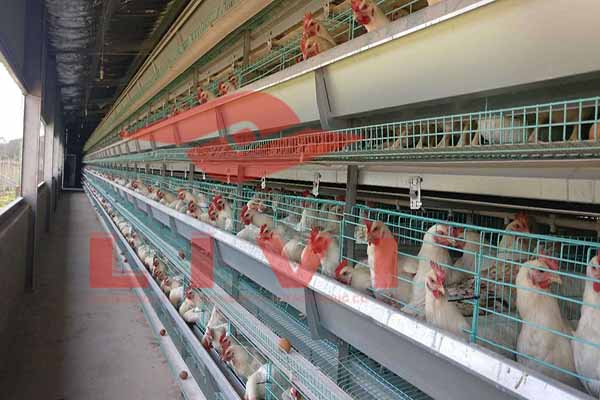
A 10,000-bird Nigeria poultry house should not be quoted as a generic package. Livi supplies verified H1200 layer stacking equipment with hot-dip galvanized cage mesh, automatic manure belt, feeding cart, and auger components, but final cage count and row configuration depend on house width, ceiling height, tier design, and automation level. Nigeria’s hot, humid climate makes ventilation and backup power part of the core equipment plan, not a later add-on.
Direct Answer: What Engineering Readiness Means for Livi Poultry House Equipment in a 10,000-Bird Nigeria Farm
Engineering readiness means confirming the following before equipment production:
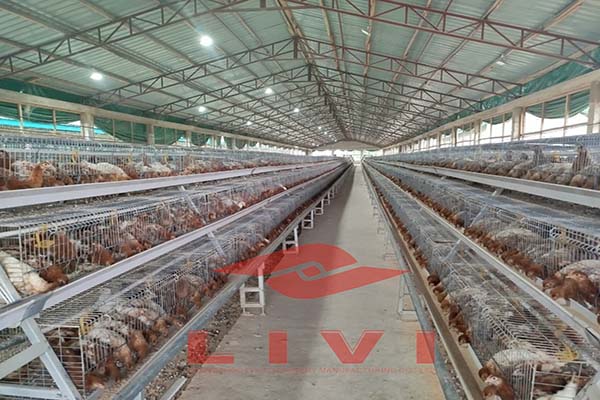
- Verify site location, house dimensions, orientation, floor level, and drainage.
- Confirm electrical supply: 380V or 220V, phase, frequency, and stability; water source and quality.
- Define the automation level for feeding, drinking, manure removal, egg collection, and environmental control.
- Assess access roads, offloading equipment, and storage space for delivered modular components.
- Decide whether the house already exists; narrow existing buildings may require A-type cages instead of high-density H1200 stacking equipment.
Without this verification, a buyer risks receiving a layout that does not fit the actual building or local operating conditions.
Why Engineering Readiness Must Come Before Equipment Selection
A 10,000-bird house is large enough to cause expensive retrofits if cage rows, feeding line direction, and manure belt motor positions are not coordinated with building width, columns, and ventilation openings. Livi H1200 layer stacking equipment supports high-density layer production, but it requires adequate building height and structural clearance. For narrower existing houses or lower automation budgets, an A-type layer cage may be more practical.
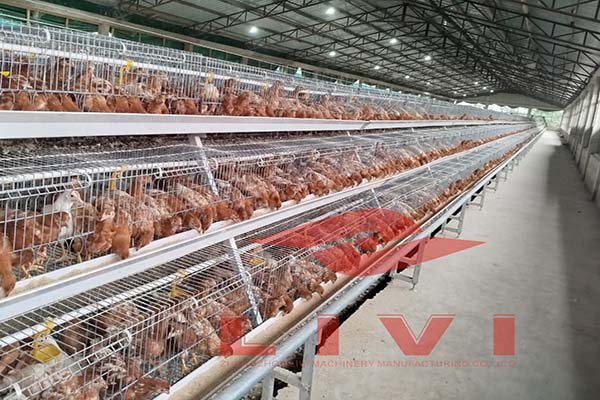
Livi also supplies A-type systems for medium-scale projects. A separate verified Burkina Faso project used A-type layer cage 1950×350×380 mm and A-type pullet cage 1950×500×350 mm, confirming that A-type configurations are available when site conditions make H1200 less suitable. However, this does not mean the same cage dimensions or row layout apply directly to Nigeria; each site must be verified.
Site verification should include house orientation east-west, sidewall opening design, floor leveling, drainage, and separation between clean and dirty farm traffic. Livi’s engineering approach includes factory pre-testing and modular packaging, so equipment can be validated before shipment and reduce on-site assembly problems.
Key Product Specifications for H1200 Layer Stacking Equipment (Component-Level Verification)
The table below lists verified component specifications for Livi H1200 layer stacking equipment. Final cage count and total bird capacity for a Nigeria 10,000-bird house require a site-specific layout and cannot be inferred from the table alone.
| Component | Material / Key Specification | Verified Feature for Nigeria Site Planning |
|---|---|---|
| Cage mesh | Q235 steel, hot-dip galvanized, bottom/side/partition wire 2.3mm, cage door wire 4.0mm, bottom wire spacing 25mm, 7° bottom slope | Corrosion resistance for Nigeria’s humid poultry houses; smooth surface reduces bird injury. |
| Manure belt and frame | Zinc-aluminum-magnesium alloy frame 3.0mm, PP manure belt 1.2mm, 0.75kW dual motor with gear reducer, scraper and tension tracking | Separate layer manure handling suitable for long houses; corrosion-resistant frame important in ammonia and humidity. |
| Feeding cart | Frame 3.0mm zinc-aluminum-magnesium, hopper 1.0mm, 0.75kW motor, adjustable feeding regulator, observation window, cleaning brush, driving bird bar, return feed block | Uniform feeding and reduced manual labor; helps avoid feed residue and mold risk. |
| Auger | 110mm diameter PVC outer pipe, 3.0mm wall, 1.1kW motor, imported carbon steel spiral core | PVC outer pipe resists high humidity and ammonia, suitable for feed transport without rust. |
| Trough and support | Trough 1.0mm zinc-aluminum-magnesium one-piece formed, large slope; support 2.0mm with reinforcing ribs; cage net post 2.0mm one-piece formed; K plate 1.0mm zinc-aluminum-magnesium + hot-dip galvanized; partition buckle double-direction limit | One-piece formed trough and reinforced support maintain alignment and stability in daily operation. |
| Cage mesh service life | Verified claim: uniform anti-corrosion layer, smooth surface and structural strength maintained, service life up to 20 years under normal use | Long service life reduces replacement frequency in high-humidity environments. |
These component facts come from verified Livi product information for H1200 layer stacking equipment. No cage set count or tier configuration for a specific Nigeria 10,000-bird house is provided because those values must be confirmed by final site survey.
How Site Verification Prevents Costly Retrofits for a Nigeria 10,000-Bird Layer House
Consider a common planning sequence for a new 10,000-layer house in Nigeria. An investor asks for Livi Poultry House Equipment pricing before the building plan is final. Livi requests house dimensions, orientation, power stability, water quality, and desired automation level.
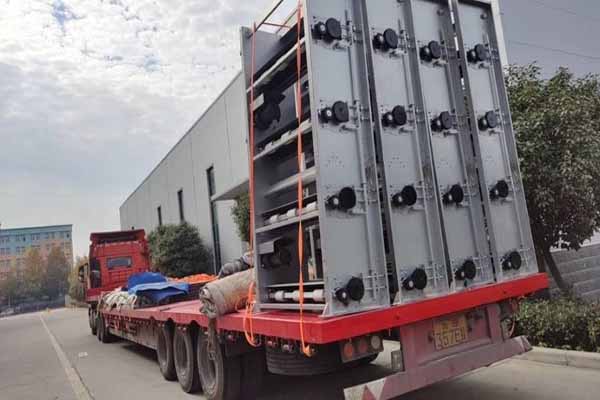
During site verification, the original planned house width may be found insufficient for an H1200 layout with the required aisle widths. The investor then either adjusts to a wider building or selects an A-type configuration. Factory pre-testing confirms the feeding cart and manure belt run correctly before shipment, reducing on-site assembly time. The project proceeds with a confirmed layout, modular shipping, and local installation support, avoiding retrofit costs and production delays.
This sequence shows why engineering readiness is more valuable than a generic quote. It does not describe a named customer or claim an unverified performance result.
Transportation and Site Receiving for Nigeria Poultry House Equipment
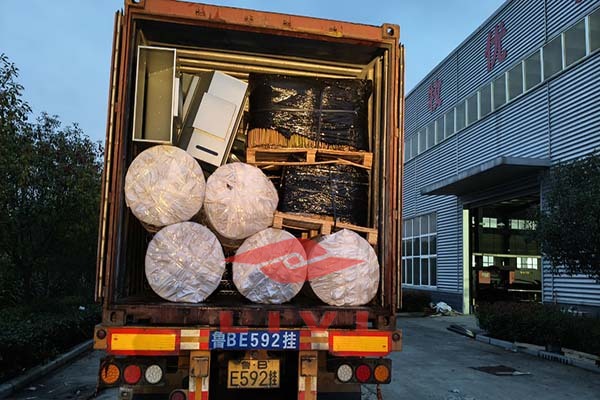
- Equipment produced in Henan, China can be shipped via sea freight to Lagos, Port Harcourt, or Onne, with final delivery to the farm site.
- Modular packaging and factory pre-testing reduce the risk of damage during long-distance container transport.
- The project team should confirm offloading equipment, access road condition, and storage area before the container arrives.
- Customs clearance and import documentation should be prepared in advance to avoid delays at Nigerian ports.
- Site receiving inspection should check for damaged components, verify part numbers, and compare against the packing list before installation.
Installation Steps for a Nigeria 10,000-Bird Poultry House
- Confirm final site survey: house dimensions, floor level, column positions, power supply stability (380V or 220V), water source, and drainage.
- Freeze the equipment layout: cage rows, aisle widths, feeding line direction, manure belt motor locations, and egg collection path for layer systems.
- Prepare the foundation and floor according to Livi drawings, ensuring load-bearing and proper slope for drainage.
- Install lower support structure and cage mesh using verified hot-dip galvanized components, following the Livi assembly manual.
- Mount automatic feeding cart, auger, nipple drinking lines, and manure belt systems; check tension and alignment for belts.
- Connect electrical and environmental controls; if using cooling pads and fans, complete ducting and sealing before testing.
- Run all systems empty first: feeding cart travel, auger rotation, manure belt tracking, drinking line pressure, and emergency stops.
- Perform a load test with a small batch of birds or simulated load, then train farm staff on daily operation, cleaning, and simple troubleshooting.
Frequently Asked Questions
What site information is required before Livi can provide a 10,000-bird poultry house equipment plan for Nigeria?
Provide exact house dimensions, orientation, and whether the building exists. Include power supply details such as voltage, phase, frequency, and stability; water source and quality; desired automation level for feeding, drinking, manure removal, egg collection, and environmental control; and access road and storage conditions for delivered components.
Can the H1200 layer stacking equipment be used for a 10,000-bird layer house in Nigeria?
Yes, H1200 is a verified Livi layer stacking equipment series for high-density layer production, but final suitability depends on building width, height, and automation goals. The number of cages and tiers cannot be determined from bird count alone; a site-specific layout is required. For narrower existing houses or lower investment budgets, an A-type layer cage may also be evaluated.
How does Nigeria’s climate affect poultry house equipment selection?
High temperature and humidity require adequate ventilation, cooling pads or foggers, and possibly tunnel ventilation design. Corrosion-resistant materials such as hot-dip galvanized cage mesh and zinc-aluminum-magnesium frames are important in Nigeria’s humid environment. Backup power generation should be planned for feeding, drinking, and ventilation equipment to prevent heat stress losses.
What does Livi provide for installation and after-sales support on a Nigeria poultry farm?
Livi provides installation guidance, commissioning support, and staff training. Factory pre-testing and modular packaging reduce on-site assembly errors. After-sales includes troubleshooting, spare parts guidance, and process feedback for continuous improvement.
Why is engineering readiness more important than a generic equipment quote for a 10,000-bird farm?
A standard quote cannot account for local site constraints, power stability, ventilation layout, or manure handling routes. Engineering verification ensures cage rows, aisles, and automation systems fit the actual house, avoiding costly retrofits. It also allows Livi to coordinate transportation, installation sequence, and staff training with the farm’s operational plan.
What are the first steps to start a 10,000-bird Nigeria poultry house project with Livi?
Share target bird type and exact capacity; provide house dimensions and site photos or drawings; confirm power, water, and access road conditions; then request a site-specific layout and equipment configuration from Livi’s engineering team.
Plan Your Nigeria Poultry House with Livi Poultry House Equipment
Planning a 10,000-bird poultry farm in Nigeria? Send your site dimensions, power supply details, and target bird type to Livi Machinery for an engineering readiness check and a site-specific poultry house equipment layout. Livi Poultry House Equipment can be matched to your house structure and Nigeria climate only after these details are confirmed.







