
Livi Poultry House Equipment: Self-Rearing vs Buying Pullets for a 5,000-Layer Farm in Nigeria
Quick Answer / Project Summary
For a 5,000-layer farm, the decision between self-rearing pullets on-site and buying them from external suppliers is not just a cost line. Self-rearing with a dedicated 5,000-pullet unit ties replacement birds directly to the egg house, but requires separate management, housing, and scheduling. Buying pullets simplifies operations, but adds recurring purchase costs and external biosecurity dependency.
A verified dual-unit reference is a Burkina Faso project using 1950×350×380 mm A-type layer cages in a 38×8×4 m layer house and 1950×500×350 mm A-type pullet cages in a 42×8×3.5 m pullet house, with 380V power for both units. The correct comparison is not 10,000 birds in one system, but two linked production stages that must share land, labor, and equipment decisions.
This article helps Nigerian poultry investors compare self-rearing and buying pullets, using the Burkina Faso reference only as a verified planning model. Nigeria-specific costs, import duties, climate data, and local regulations are not included and must be confirmed separately before final design.
Why Dual-Unit Planning Matters for Nigerian Poultry Investors
Many commercial layer farms must secure replacement pullets. The choice between self-rearing and buying is a long-term operational decision, not just a spreadsheet line.
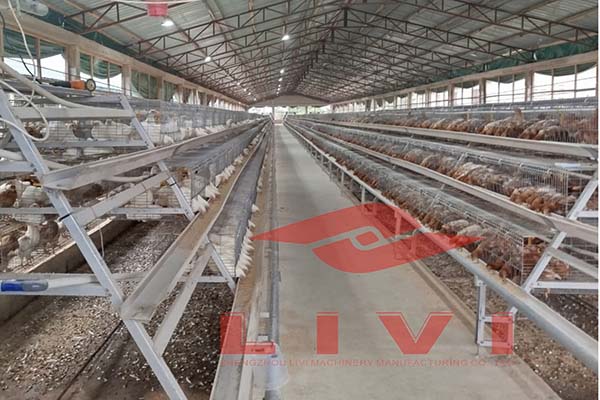
Self-rearing creates a continuous production cycle:
Pullet → Transfer → Layer → Next Batch
However, this cycle only works if house dimensions, bird age, cleaning schedules, and transfer routes are coordinated. A-type cages fit the 5,000–10,000 bird scale, but final suitability depends on building width, desired automation level, labor availability, budget, manure management, ventilation strategy, and future expansion plans.
For Nigeria, local climate, feed costs, import duties, and construction costs must be confirmed separately. Do not copy Burkina Faso ventilation or power assumptions without validation.
Verified Dual-Unit Reference Specifications for 5,000 Layers + 5,000 Pullets
The following table lists verified parameters from the Burkina Faso project. Country in the reference case is Burkina Faso, not Nigeria.
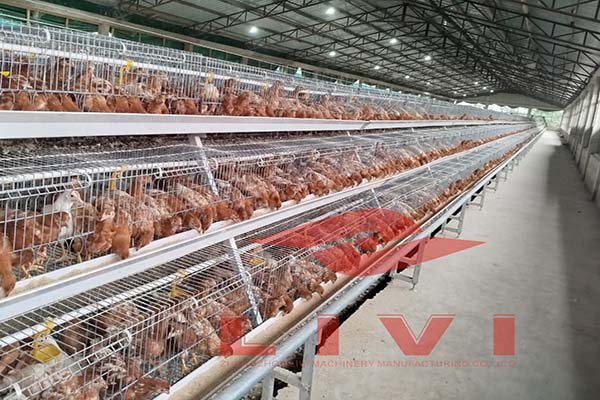
| Item | Layer Production Unit | Pullet Rearing Unit |
|---|---|---|
| Country reference | Burkina Faso | Burkina Faso |
| Capacity | 5,000 layers | 5,000 pullets |
| House size | 38 × 8 × 4 m | 42 × 8 × 3.5 m |
| Building area | 304 m² | 336 m² |
| Cage type | A-type layer cage | A-type pullet cage |
| Cage dimensions | 1950 × 350 × 380 mm | 1950 × 500 × 350 mm |
| Production role | Commercial egg production | Replacement bird rearing |
| Power supply | 380V | 380V |
| Final equipment layout | Project-specific | Project-specific |
Cage tier configuration, number of cage sets, row layout, and automation level are not specified in the source facts. They must be finalized after confirming the farm site and production plan.
Customer Case Reference: Burkina Faso Dual-Unit 5,000+5,000 Farm
This verified reference project is not a Nigeria result, but it demonstrates how a 5,000-layer and 5,000-pullet farm can be planned as one coordinated system.
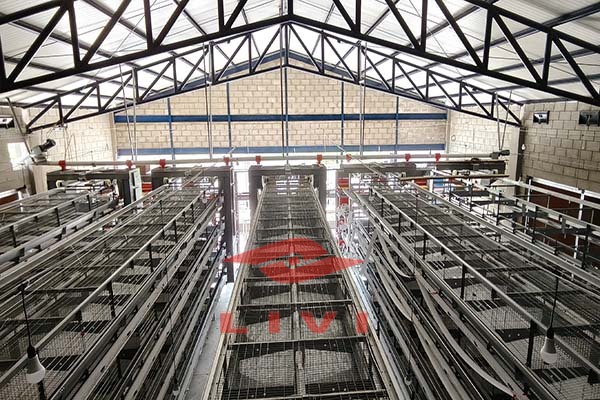
- Layer house: 38×8×4 m with A-type layer cages 1950×350×380 mm.
- Pullet house: 42×8×3.5 m with A-type pullet cages 1950×500×350 mm.
- Power supply: 380V.
- Exact cage count, automation level, and ventilation design: remain project-specific and unconfirmed.
- Customer name, project result, and performance data: not provided.
Use this model to understand the physical relationship between the two houses, not as a template to copy blindly for Nigeria. Nigerian climate, bird genetics, labor costs, and utility conditions require separate validation.
Equipment and Automation Decision for Each House
Livi Poultry House Equipment includes A-type layer and pullet cages, plus optional automatic feeding, drinking, manure removal, egg collection, ventilation, and environmental control systems. For a 5,000+5,000 farm, automation is not an all-or-nothing decision.
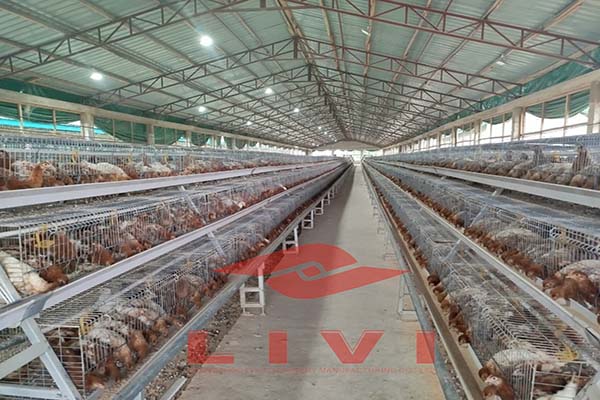
Evaluate each house separately for:
- Feeding: How feed moves from storage to birds. Automatic feed systems reduce daily labor but require reliable power.
- Water: Clean water delivery and management. Nipple drinkers with proper pressure are standard for caged birds.
- Manure removal: Options range from manual scraping under A-type cages to belt manure removal for higher automation.
- Egg collection: Manual collection is common at 5,000 layers, but automatic egg belts can reduce labor and egg damage.
- Ventilation and cooling: Burkina Faso reference does not include confirmed fan counts or cooling pad specs. For Nigeria, semi-open or closed-house design must be matched to local heat and humidity.
- Environmental control: Growing pullets and adult layers require different temperature and airflow. Do not apply the same settings to both houses.
A-type cages in this project use verified cage sizes. Livi A-type systems can be customized with galvanized components, including zinc-aluminum-magnesium coated frames, hot-dip galvanized wire mesh, and feed troughs with high corrosion resistance. The exact automation package should be chosen after mapping daily labor tasks.
Transportation and Delivery Planning for Dual-Unit Equipment
Equipment is manufactured at Livi's production base in Henan, China. Livi supports export packaging and delivery coordination. For Nigeria, buyers must confirm:
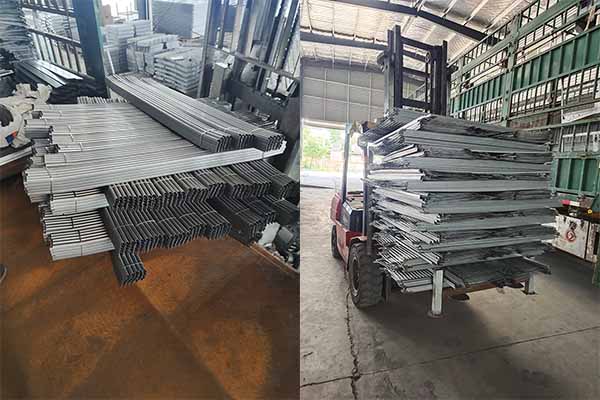
- Port of discharge and inland transport route.
- Site access for unloading and moving cage sections.
- Import duties, customs clearance, and local trucking requirements with Nigerian authorities.
- Destination-specific shipping terms and costs with Livi before order finalization.
Do not assume Burkina Faso shipping routes or costs apply to Nigeria.
Key Planning Steps Before Equipment Production
- Confirm tier configuration and per-set capacity for both A-type layer and pullet cages.
- Finalize house layouts for the 38×8×4 m layer house and 42×8×3.5 m pullet house before construction.
- Develop a replacement flock schedule linking 5,000 pullets to 5,000 layers.
- Separate bird movement, feed delivery, manure removal, egg collection, and worker traffic on the farm site.
- Confirm water quality, supply, and storage for both houses.
- Design environmental management separately for growing pullets and adult layers.
- Verify electrical frequency and phase beyond the confirmed 380V.
- Reserve space and utility capacity for future expansion.
FAQ
1. Is a 5,000-layer + 5,000-pullet farm the same as a 10,000-layer farm?
No. Only 5,000 birds are planned for egg production. The other 5,000 are replacement pullets in a separate rearing unit. Each group needs different cage systems and management approaches.
2. Why use different A-type cage sizes for layers and pullets?
1950×350×380 mm is the A-type layer cage specification for adult layers. 1950×500×350 mm is the standard A-type pullet cage specification for growing replacement birds. They serve different production stages and stocking requirements.
3. How many cages are needed for 5,000 layers?
Exact cage count depends on tier configuration and doors per set. The specified 1950×350×380 mm cage can be arranged in multiple tiers. Confirm the final layer and tier layout before ordering equipment.
4. Should both houses use the same automation level?
Not necessarily. Evaluate feeding, watering, manure removal, and egg collection separately for each house. Choose mechanization based on labor, budget, and workflow priority.
5. Is 380V enough to configure the equipment?
380V is confirmed for the reference project, but frequency and phase must also be confirmed before final electrical design. Total power demand depends on selected automation and ventilation systems.
Plan Your Dual-Unit Poultry House Equipment with Livi
For a dual-unit layer farm in Nigeria with 5,000 layers and 5,000 pullets, share your target capacity, house dimensions, power conditions, and automation preferences with Livi. Our team can provide a coordinated equipment layout and replacement flock schedule tailored to your site.
Contact Livi today for a project-specific quotation using the verified A-type cage specifications and 380V power framework.







