
Engineering Site Readiness for a 10,000-Layer Poultry House in Nigeria: What to Verify Before Ordering Livi Poultry House Equipment
Quick Answer: What to Verify Before Ordering Equipment for a 10,000-Layer Poultry House in Nigeria
Before finalizing an order for Livi poultry house equipment for 10,000 layers in Nigeria, verify the following six site conditions:
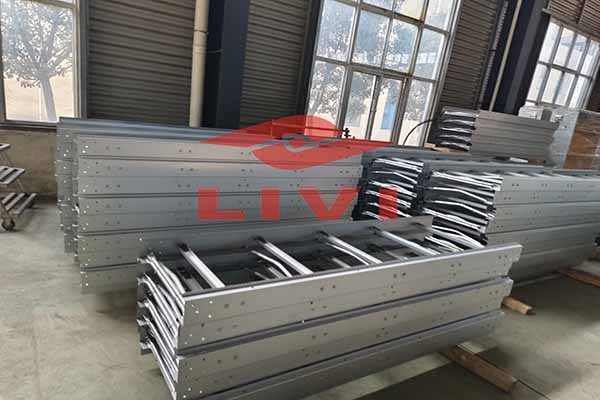
- Available land and building orientation, because they determine cage row count, aisle width, and ventilation path.
- Stable power supply with voltage, frequency, phase, and backup generator capacity before selecting motorized equipment.
- Water quality and flow rate for both drinking and cooling systems.
- Road access and unloading space for container delivery and crane or forklift handling if required.
- House width, length, and eave height against candidate A-type or H-type cage layouts.
- Biosecurity zones and site drainage to avoid cross-contamination and manure buildup.
These checks are not optional. They decide whether the equipment will fit the building, run reliably on local power, and operate without daily bottlenecks.
Why Site Readiness Determines Equipment Selection for a Nigerian 10,000-Layer House
A 10,000-layer house is a commercial production unit where layout, climate, and labor constraints directly affect equipment profitability. Nigeria's hot and humid conditions make ventilation and cooling design a primary site-readiness issue. If the building orientation is wrong or the sidewall openings are undersized, even a well-built cage system will underperform.
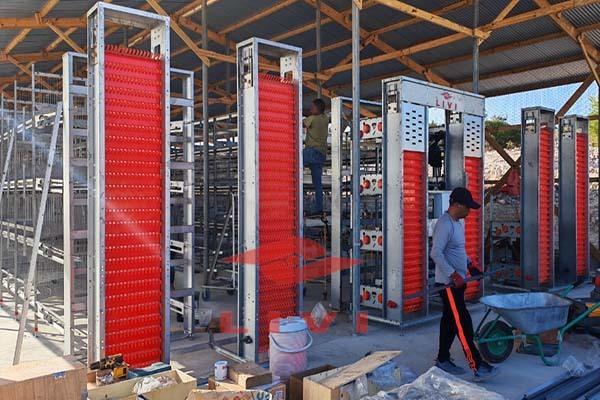
A-type or H-type cage selection should follow building width, height, automation goals, and expansion plans rather than being chosen first. Livi Machinery can propose A-type, H-type, or stacked layer systems after gathering land, power, water, and house data. The company has 13 years of poultry equipment experience and serves commercial layer projects in Africa, the Middle East, Southeast Asia, South America, Central Asia, and Europe. Both H1200 layer stacked equipment and A-type layer cage systems are available, with matching automated feeding, drinking, manure removal, egg collection, ventilation, and environmental control components.
Feed storage, manure handling, egg collection routes, and worker movement must be planned before equipment manufacturing. A site-readiness review prevents the costly mistake of manufacturing cages that cannot fit through the door or align with the house columns.
What to Confirm on Site Before Finalizing Livi Poultry House Equipment Specifications
| Verification Item | Why It Matters Before Ordering |
|---|---|
| Building dimensions and orientation | Check house width, length, eave height, and east-west orientation to determine row count, aisle width, and ventilation path. |
| Power supply | Confirm voltage, frequency, phase, maximum connected load, and generator backup if grid is unstable. |
| Water source | Test flow rate, pressure, and quality for drinking lines, evaporative cooling, and cleaning. |
| Access roads | Measure road width, turning radius, and unloading space for container trucks or crane operations. |
| Climate data | Note seasonal temperature, humidity, and prevailing wind direction to size ventilation and cooling. |
| Biosecurity zones | Define clean and dirty routes for workers, feed, eggs, manure, and vehicles. |
| Future expansion | Identify adjacent land or building reserves so current utility sizing does not block growth. |
Livi Machinery customizes cage layout, row spacing, and automation level based on confirmed site data. Final row spacing, aisle width, and utility entry points are locked only after these items are verified.
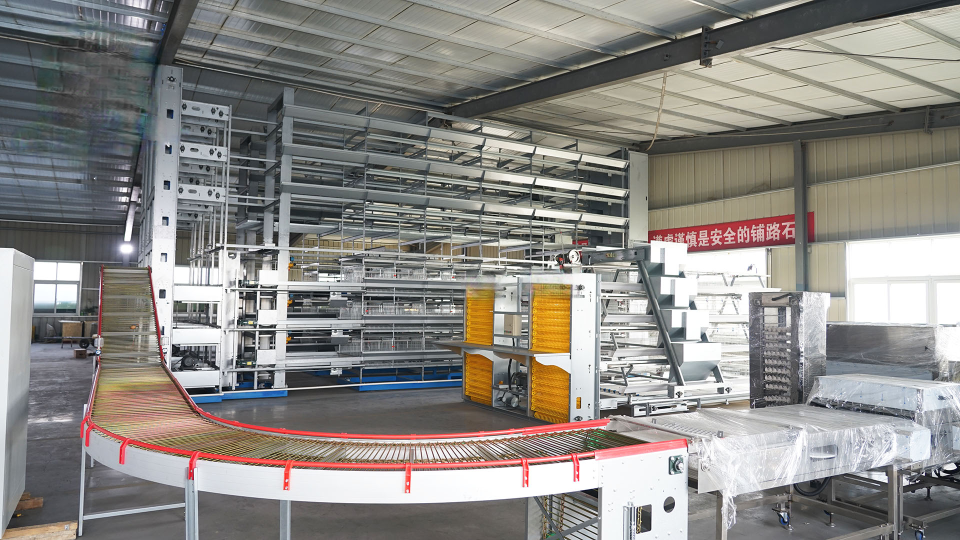
Power, Water, and Access: The Utility Checklist
Power Supply: More Than Just 380V
Voltage alone is not enough. You must also confirm frequency, phase, expected maximum connected load, and whether a generator backup will be used. Fan banks, feed motors, manure belts, and egg collection all add electrical load. Do not assume 380V is sufficient without adding up the connected equipment. Livi will confirm motor ratings and control panel compatibility based on the final equipment list.

Water and Drainage
Water quality and flow rate matter for nipple drinking lines and evaporative cooling pads. Poor water pressure causes uneven drinking; high mineral content can clog nipples and cooling pads. Site drainage prevents manure runoff and keeps service routes usable during the rainy season.
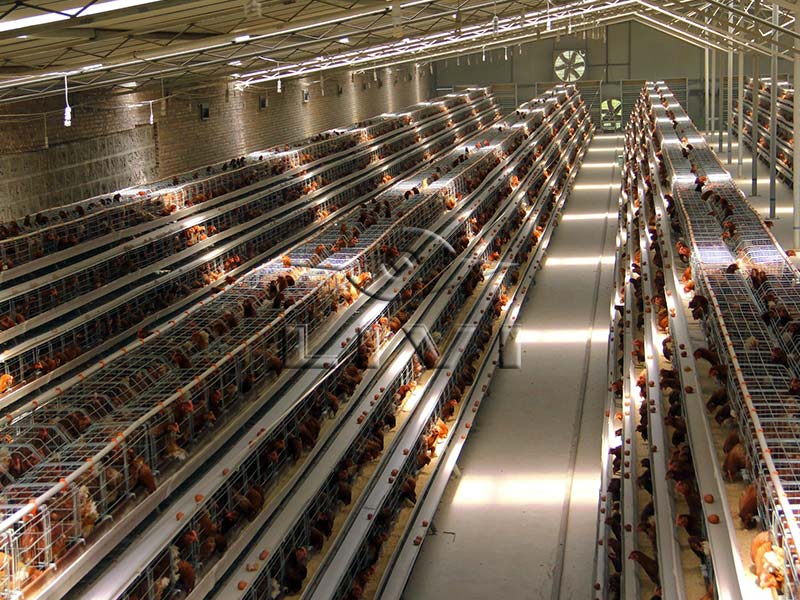
Road Access and Unloading
Confirm road access from the port to the farm, including bridge or gate clearance and truck turning space. Plan a container unloading area near the poultry house or a designated laydown yard. Based on packaged module weights and dimensions, decide whether a crane, forklift, or manual unloading is needed. Coordinate delivery with civil works completion so equipment does not sit exposed to weather or theft.
Transportation and Delivery Planning for a 10,000-Layer Poultry House in Nigeria
Livi Machinery packs cage systems and equipment with protective packaging suitable for long-distance shipping. However, the farm must be ready to receive the shipment. A practical delivery plan covers four points:
- Confirm road access from the port to the farm, including bridge or gate clearance and truck turning space.
- Prepare a container unloading area near the poultry house or a designated laydown yard.
- Decide whether a crane, forklift, or manual unloading is needed based on packaged module weights and dimensions.
- Coordinate the delivery sequence with civil works completion so equipment does not sit exposed to weather or theft.
Document customs and import requirements before shipment to avoid port demurrage.
Planning Walkthrough: 10,000-Layer Nigeria Project Site Review
A Nigerian investor planning a 10,000-layer commercial house should start with a site survey, water test report, utility voltage details, and road access photos. Before any quote, Livi asks for these documents. Suppose the site shows a 12-meter-wide house with a 3.5-meter eave height and stable 380V/50Hz grid power. In that case, Livi can evaluate both A-type and H-type layouts. The H-type option becomes conditionally suitable if the house height allows additional tiers and the client accepts higher automation. The final order is placed only after row spacing, aisle width, manure pit, and future expansion space are confirmed on drawings.
This process prevents the common error of building the house first and then discovering that the chosen cage system does not fit or the power supply cannot run the fans.
How Livi Supports Equipment Configuration and Installation
Livi Machinery provides project-specific production and pre-delivery trial assembly to reduce on-site errors. After equipment delivery, Livi offers installation guidance or supervision and operator training. Technical follow-up supports commissioning, maintenance planning, and spare parts identification.
The installation sequence typically includes:
- Confirm the poultry house shell, foundation, floor, and utility entry points are completed before equipment arrival.
- Mark cage row centerlines and aisle widths according to the approved layout drawing.
- Install cage frames, tiers, and partition panels sequentially using the modular component labels.
- Connect automatic feeding lines, nipple drinking lines, and water pressure regulators.
- Install manure removal belts or scrapers and verify belt tracking and tension.
- Mount ventilation fans, cooling pads, and environmental control sensors at specified locations.
- Run electrical cabling and connect control panels; verify motor rotation and emergency stops.
- Conduct a full system test run with dry run cycles and make adjustments before bird placement.
- Train farm staff on daily feeding, manure removal, egg collection, and basic troubleshooting.
- Complete installation handover documentation and a punch list for remaining items.
Frequently Asked Questions
What is the first thing to verify before ordering poultry house equipment for 10,000 layers in Nigeria?
Confirm building dimensions and orientation, check stable power supply, test water quality and flow rate, and measure access road width and unloading space.
Do I need to choose between A-type and H-type cages before site readiness is checked?
Not necessarily. Livi can evaluate both once house width, height, and automation goals are known. A-type systems generally suit medium-scale projects and lower automation budgets, while H-type supports higher density and more automation.
What power information do I need to provide before equipment configuration?
Voltage, frequency, phase, expected maximum connected load, and whether generator backup will be used. Do not assume 380V is sufficient because fan banks, feed motors, manure belts, and egg collection add load.
How can I prepare the poultry house for automated manure removal?
Ensure floor slope or manure pit depth matches the selected manure belt or scraper system. Provide a drainage channel and an access point for manure removal vehicles. Check house length against belt pulling capacity before finalizing the manure system configuration.
What if my land is limited or irregularly shaped for 10,000 layers?
Livi can propose a shorter house with additional cage tiers or an H-type layout if building height allows. A site survey and boundary map are needed before drawing row layouts. Do not buy cages based on an assumed house width without verifying the actual plot dimensions.
Does Livi provide installation support after equipment arrives in Nigeria?
Yes. Livi offers installation guidance or supervision depending on project scope. Factory pre-assembly and modular packing reduce on-site labor and errors. Operator training and after-sales technical support are provided after commissioning.
Get a Site-Ready Equipment Quote for Your Nigerian Layer House
Send Livi Machinery your site plan, power and water details, and target capacity for a 10,000-layer Nigeria project. Our engineering team will prepare a site-readiness checklist and recommend the appropriate H-type or A-type layer cage configuration before you order equipment.






