
.livi-tag-link:hover{color:#c95757 !important;}
Project Solution at a Glance
A 20,000-bird layer house in Ghana is not a fixed Livi Layer Battery Cage package. First verify land and poultry-house dimensions, power stability, water quality, and local climate. LIVI supplies automatic feeding, drinking, egg collection, manure removal, ventilation, and climate-control systems, but final layout and cage count depend on confirmed project inputs. Pre-installation readiness also covers road access, unloading, installation, training, and after-sales support. Global FAO guidance can support welfare review, but must not be read as Ghana law.
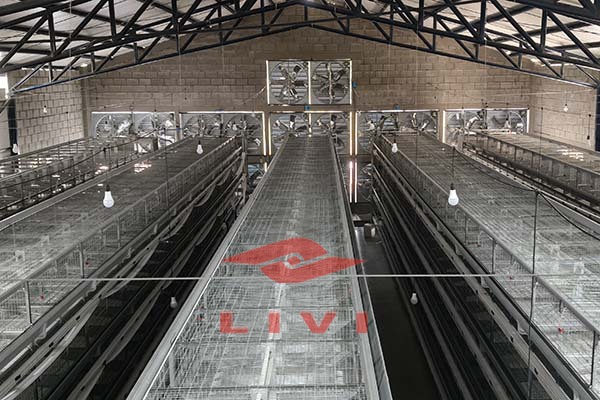
Planning a Similar 20,000-Layer Ghana Project?
Share your Ghana site location, land or poultry-house dimensions, power and water conditions, automation level, and egg sales route so LIVI can help screen the project and prepare a site-ready layout.
Why Site Readiness Must Be Confirmed Before Cage Selection in Ghana
A buyer should first confirm market channels, land, water and power reliability, replacement birds, and expansion space before locking equipment. Ghana conditions cannot be assumed from other countries; local temperature, humidity, rainy-season access, and grid stability must be verified. Separate project screening from equipment configuration: screening asks whether the project can operate, configuration asks which cage layout and automation fit confirmed inputs. Independent EFSA welfare guidance can support review, but applicable Ghanaian standards must be confirmed locally.
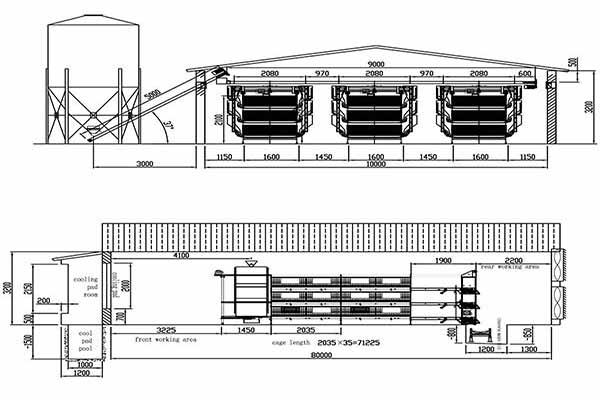
Pre-Installation Inputs for a 20,000-Bird Layer House in Ghana
The table below lists inputs to confirm before finalizing a Livi .
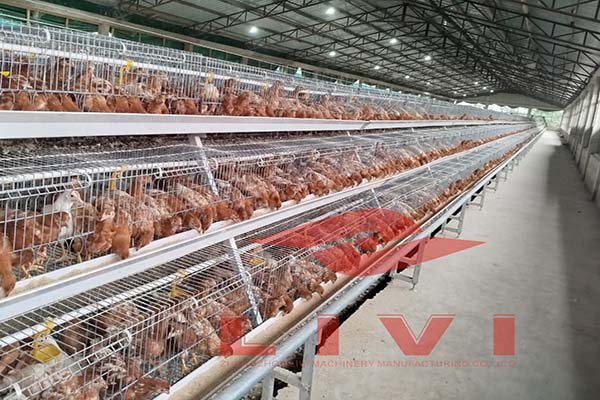
| Site/Delivery Input | Why It Must Be Confirmed |
|---|---|
| Land size, shape, orientation | Affects house number, row layout, aisle width, and expansion zone. |
| House dimensions | Determines whether A-type or H-type layer cage fits and row count. |
| Power voltage, frequency, phase, backup capacity | Needed before motorized equipment selection. |
| Water source, storage, quality, flow rate | Required for nipple drinking and cooling. |
| Local temperature, humidity, rainy-season access | Drives ventilation and cooling-pad decision. |
| Road access, unloading area, storage | Determines delivery feasibility and handling method. |
| Biosecurity and expansion reserve | Prevents cross-contamination and costly retrofits. |
A-type and H-type systems differ in density and automation; reviews of housing systems and welfare in laying hens help evaluate cage-type choices, but site dimensions decide fit.
Illustrative Ghana 20,000-Bird Layer House: Decision Scenario for Pre-Installation Readiness
This is an illustrative scenario, not a verified case. A Ghana buyer planning 20,000 layers should first collect land dimensions, house options, and utility data—not buy a fixed number of cages. For an existing house, width, height, and ventilation may favor one cage type or row arrangement. For a new site, compare one-house and two-house phased options and reserve space for feed, egg, manure, utility, and biosecurity areas. No Ghana site facts or customer outcomes are supplied, so all recommendations remain conditional.
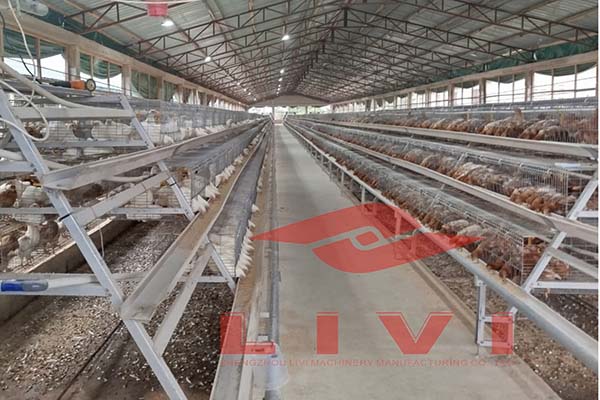
Transportation and Site-Receiving Boundary for the Ghana 20,000-Bird House
Start transport planning before production. Confirm port-to-site routing, road width, turning radius, unloading space, and crane or forklift needs. LIVI can provide delivery guidance and document support, but local transport, customs, and last-mile conditions must be confirmed by the buyer or freight partner. Reserve dry storage, protect galvanized components, and sequence unloading with installation. No shipping cost, transit time, customs duty, or freight terms can be supplied.
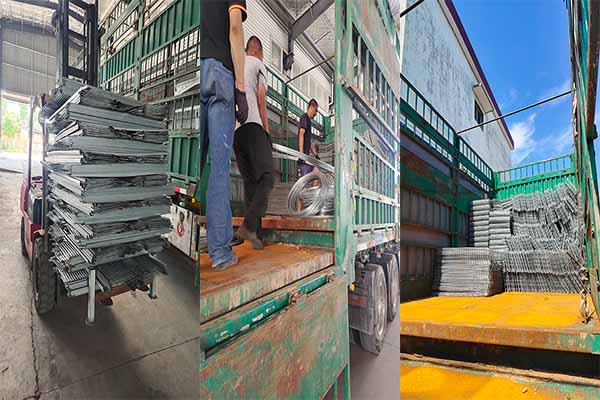
Need a Turnkey Delivery Checklist for Your Layer House?
Tell LIVI your target capacity, house dimensions, climate data, utility reliability, and phased construction plan to align equipment, delivery, installation, and training scope.
Pre-Installation and Turnkey Delivery Sequence
- Confirm location, land boundaries, and poultry-house dimensions before equipment selection.
- Verify power phase, voltage, frequency, backup capacity, water source/quality, and local climate data.
- Select cage type, row layout, and automation level only after site inputs are confirmed.
- Plan delivery, unloading, storage, and installation sequence before arrival.
- Install cage frames and connect feeding, drinking, egg collection, manure removal, ventilation, and climate control.
- Commission systems, test alarms, train operators, and define after-sales and spare-part planning.
Buyer Decision Before Finalizing Equipment
Before finalizing the Livi Layer Battery Cage order, compare the existing-house option against a new-build layout. If the existing width cannot accommodate the desired row count, automation may increase operational pressure instead of reducing it. Confirm the future expansion area now, because adding a second house later requires reserve for roads, feed, egg, manure, and utility lines.
FAQ
What should a Ghana buyer verify before ordering a Livi Layer Battery Cage for 20,000 layers?
Verify land size and orientation, poultry-house dimensions, power voltage, frequency, phase and backup capacity, water source and quality, local temperature and humidity, road access, and required automation level. Do not finalize cage count or row layout until these inputs are confirmed, because they determine whether the equipment fits the house and operates reliably.
Is a turnkey 20,000-bird layer house in Ghana one building or multiple houses?
There is no fixed configuration from bird count alone. The number of houses depends on land shape, existing structures, ventilation limitations, biosecurity zones, and the phased expansion plan. A pre-installation layout should compare one-house and multi-house options before delivery and installation scope are committed.
Which cage type is suitable for a 20,000-layer Ghana project—A-type or H-type layer battery cage?
No single type is correct without site data. H-type layer battery cage systems typically support higher density and full automation, while A-type systems may be more practical for lower or existing houses with tighter dimensions. The final choice should follow confirmed house width, height, row configuration, automation level, and future expansion plan.
How should power and water be prepared before turnkey delivery for a Ghana 20,000-layer house?
Confirm electrical phase, voltage, frequency, and a backup power plan that gives priority to ventilation, drinking water, environmental controller, and alarm systems. Plan water storage, filtration, pressure regulation, and emergency supply. Water quality and stable pressure affect both bird performance and equipment operation.
Does LIVI Machinery provide training and after-sales support for a Ghana 20,000-layer project?
LIVI Machinery states that it provides installation and commissioning support, operator training, and long-term service as part of its one-stop turnkey solutions. The exact scope, schedule, and local service arrangement must be confirmed per project and may depend on delivery terms and site conditions.
Planning a Similar 20,000-Layer Ghana Project?
Need a Turnkey Delivery Checklist for Your Layer House?
TAGs: Livi Layer Battery Cage, 20,000-layer poultry house Ghana, turnkey layer farm Ghana, automated layer cage system, poultry project site readiness, layer house delivery checklist







